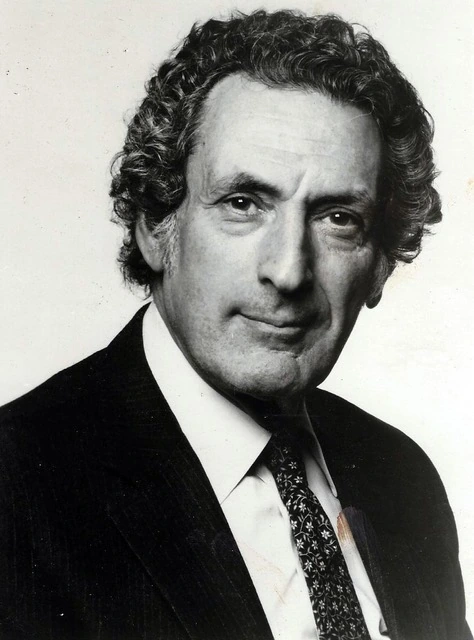
Jim Kozimor's net worth is estimated at around $2 million to $4 million as of mid-2026, with a best-guess figure of roughly $3 million. That range reflects a long career as a television and radio sports announcer with NBC Sports, steady Olympic broadcast work spanning eight assignments, and a notable business co-founding role in the financial products space. He is not a household name in the way that major network anchors are, which means credible, sourced estimates are thin on the ground, but working backward from what we know about his career tenure, industry pay norms, and business ventures gives us a reasonable ballpark.
Jim Kozimor Net Worth: Best Estimate, Range, and How It’s Calculated

Marcus Holloway
12 Jun 2026

Who is Jim Kozimor and why are people searching his net worth?

Jim Kozimor, widely known by his on-air nickname "The Koz," is an American television and radio sports announcer who has built most of his public profile through NBC Sports and NBC Sports Group. Wikipedia describes Jim Kozimor as an American television and radio sports announcer who has worked on four Olympic Games as a play-by-play announcer for NBC Sports/NBC Sports Group, including Beijing 2008, London 2012, Rio 2016, and PyeongChang 2018 for curling.
He is probably best known outside hardcore sports media circles for his curling play-by-play commentary at multiple Olympic Games, including Beijing 2008, London 2012, Rio 2016, PyeongChang 2018, the 2022 Beijing Winter Olympics, and most recently as a returning commentator for the Milan Cortina 2026 Winter Olympics, which would mark his eighth overall Olympic assignment. That consistent Olympic presence keeps his name cycling through news coverage every two years, which tends to spike net worth curiosity around broadcast personalities.
Beyond the broadcast chair, Kozimor has a meaningful business dimension that most casual searches miss: he is a co-founder and chief strategy officer of SportsETFs, the company behind the ProSports Sponsors ETF (ticker: FANZ). That ETF product, which tracks companies sponsoring major professional sports leagues, puts him squarely in the financial products world alongside his media career. That dual identity, sports broadcaster plus fintech co-founder, is part of why his name occasionally surfaces in financial trade publications, and it adds real complexity to any attempt to estimate what he is worth.
One quick disambiguation note: searches for "Jim Kozimor" are generally unambiguous, but readers who arrived here after searches for similarly named public figures should confirm they have the right person. The Jim Kozimor covered here is the NBC Sports announcer and SportsETFs co-founder, not to be confused with other "Jim K" figures in sports or business.
The net worth estimate: range and best-guess figure
Based on aggregated net worth reference sites and career-informed estimation, the working range for Jim Kozimor's net worth sits between $2 million and $4 million, with $3 million as the most defensible single figure for 2026. If you are specifically tracking Jim Koons automotive net worth, look at how the same kind of income streams, ownership stakes, and asset growth logic applies to that business profile.
If you are specifically looking for Jim Koehler net worth, that figure is typically derived from similar income and investment assumptions, but it should be checked against the most reliable, current sourcing available. The low end of that range accounts for the possibility that his SportsETFs equity stake is modest and that his NBC Sports compensation, while steady, has never been at the top-tier anchor level.
The high end accounts for equity upside in SportsETFs if the FANZ ETF has grown assets under management meaningfully, plus accumulated savings from decades of broadcast work.
It is worth being honest here: published net worth estimates for Kozimor are not abundant, and the figures that do circulate on celebrity wealth sites have varying methodologies. Some aggregate sites have listed figures in the $1 million to $5 million range without detailed breakdowns. None of those figures should be treated as precise. The $3 million best-guess figure in this article is a reasoned estimate that factors in career longevity, industry compensation data, and the business co-founder angle, not a number drawn from a public filing or a confirmed source.
How net worth is actually calculated (and why estimates vary)

Net worth is, at its most basic, total assets minus total liabilities. Assets include things like cash savings, real estate, investment accounts, equity in private or public companies, vehicles, and other property. Liabilities are what you owe: mortgages, loans, credit balances. The gap between those two numbers is net worth. For a celebrity or public figure, most of those inputs are private, which means any published estimate is built on inference, industry benchmarks, and public disclosures rather than a full balance sheet.
For someone like Kozimor, the key assumptions in any estimate are his annual salary from NBC Sports over a multi-decade career, potential equity or profit-sharing in SportsETFs, and general wealth accumulation patterns for broadcast professionals at his level. Because he is not a CEO of a publicly traded company, there are no SEC filings to check. Because he is not a major celebrity at the level where real estate transactions become tabloid fodder, property records rarely surface in mainstream coverage. That information vacuum is why estimates on different sites can vary by a million dollars or more without either site being obviously wrong.
Income streams and career factors driving his wealth
Kozimor's primary income source over the years has clearly been broadcast compensation from NBC Sports and NBC Sports Group. Sports announcers at the network level, particularly those with sustained Olympic roles and long-term contracts, typically earn salaries in the range of $100,000 to $500,000 per year depending on seniority, on-air prominence, and contract structure. Kozimor's eight Olympic assignments and long tenure at NBC Sports suggest he is toward the higher end of mid-tier broadcast pay rather than a lower-rung regional announcer, though he is not in the same earnings stratosphere as marquee NBC anchors.
Olympic broadcast work specifically adds meaningful income. Network talent brought in for Olympic coverage often receives additional per-event or per-cycle compensation on top of base salaries, and those assignments also carry prestige that can strengthen negotiating leverage for future contracts. Over eight Olympic cycles, those incremental payments accumulate.
The SportsETFs co-founder role is the wildcard in his wealth picture. As co-founder and chief strategy officer of the company behind FANZ, Kozimor would likely hold equity in SportsETFs LLC. The value of that stake depends entirely on how much assets under management the ETF has attracted, any revenue-sharing arrangements, and whether the company has raised outside investment. ETF businesses are typically valued as a function of AUM and management fees, so if FANZ has grown substantially since launch, that equity could be meaningful. If the ETF has remained a niche product with modest AUM, the equity value would be limited. Without public disclosure of SportsETFs' financials, that number is genuinely unknown.
Assets, business ventures, and investments to consider

Beyond salary and equity, a realistic asset picture for Kozimor likely includes standard wealth-building vehicles for a high-earning media professional: a primary residence (probably in a market where NBC Sports talent tends to be based), retirement and brokerage accounts, and potentially some direct investments in financial products, given his involvement in the ETF space. There is no public record of notable real estate holdings, art collections, or other headline-level assets, which is consistent with someone at the $2 to $4 million wealth level rather than the $10 million-plus tier. If you are specifically looking for artist Koons net worth context, keep in mind that wealth estimates for high-profile figures can swing widely based on investment visibility and asset disclosures.
The SportsETFs venture deserves a slightly longer look because it is genuinely unusual for a sports broadcaster to co-found a financial product company. The ProSports Sponsors ETF (FANZ) is a thematic ETF that invests in companies sponsoring major professional sports. Co-founding that product suggests Kozimor has a financial stake in the asset management business itself, not just a promotional role. Whether that stake translates into meaningful personal wealth depends on the firm's growth trajectory, which is not something publicly disclosed.
Controversies, verification limits, and how to read these estimates
There are no notable public controversies associated with Jim Kozimor that would materially affect a net worth discussion. The bigger issue with his wealth estimate is simply the verification gap. Almost everything about his personal finances is private, as it is for the vast majority of broadcast professionals who are not household names. He has not published a memoir detailing career earnings, his contracts are not public, and SportsETFs is a private company with no obligation to disclose financials.
When you see a net worth figure published on a celebrity wealth aggregation site, it is almost always an estimate built from a combination of industry salary benchmarks, career duration, and publicly available business information, sometimes supplemented by property records or court documents when those exist. For Kozimor specifically, the absence of those supplementary sources means the estimates are more speculative than they would be for, say, a publicly traded company executive. That does not make the estimates useless, but it does mean you should treat the $3 million figure here, and figures on other sites, as an informed range rather than a verified balance sheet.
One pattern worth flagging: some celebrity net worth sites publish figures that seem to anchor on round numbers ($1 million, $5 million, $10 million) without explaining their methodology. When you see a figure without any breakdown of income sources, assets, or assumptions, that is a signal to hold it loosely. The more useful framing is always the range, not the single number.
How to find the most current information
If you want to check for updates to Kozimor's net worth estimate after mid-2026, a few practical approaches will get you the freshest information. First, track SportsETFs and the FANZ ETF directly: ETF assets under management are publicly reported through SEC filings and financial data providers, so you can get a real-time sense of how that business is growing, which is the biggest unknown in his wealth picture. Sites like ETF.com or the SEC's EDGAR database will have current AUM and fund flow data.
Second, NBC Sports press releases and Olympic broadcast announcements (like the Milan Cortina 2026 coverage notes) confirm when Kozimor is in active contract positions, which is a proxy for ongoing income. If he picks up additional broadcast roles or expands beyond NBC Sports, that would be announced through industry trade publications like Sports Business Journal or Broadcasting + Cable.
Third, standard celebrity net worth aggregation sites update their figures periodically, though not always on a set schedule. Checking multiple sites and averaging their estimates (rather than relying on one figure) is a more reliable approach than treating any single site's number as definitive. Cross-referencing with LinkedIn for job title changes or business announcements is also useful for catching any new ventures that might affect the wealth picture.
| Wealth Component | Estimate / Status | Confidence Level |
|---|---|---|
| NBC Sports broadcast salary (career accumulated) | Primary income driver over 20+ years | High (career confirmed, salary private) |
| Olympic broadcast compensation (8 assignments) | Meaningful supplemental income per cycle | High (assignments confirmed, amounts private) |
| SportsETFs co-founder equity (FANZ ETF) | $0 to $1M+ depending on AUM growth | Low (private company, undisclosed) |
| Real estate and personal assets | Standard for career level, no public record | Low (no public filings) |
| Best-guess net worth total | ~$3 million (range: $2M to $4M) | Moderate (estimate, not verified) |
For readers who ended up here while researching other media or sports figures in a similar tier, profiles covering individuals like Jerry Koosman (the former MLB pitcher whose career earnings follow a different but comparably opaque pattern) show just how much variation there can be in wealth estimates for public figures who are famous in their field but not household names at the broader celebrity level.
If you are also comparing wealth estimates across motorsports executives, you may want the koehler motorsports net worth figure as a related benchmark. If you are comparing wealth estimates across different sports media names, you may also want to review jim koons net worth. If you meant Jerry Koosman’s financial picture instead, you can look up his net worth estimate separately. The methodology questions are largely the same across that category of public figure.
FAQ
How can I verify whether the $3 million best guess is reasonable without knowing exact salary or asset details?
A practical way to sanity-check the estimate is to back into earnings. Using the mid-tier salary range mentioned for network sports talent, you can model a multi-decade career (base salary plus Olympic add-ons) and then subtract assumed taxes and living costs. The gap that remains, after conservative savings rates, should land near the article’s $2M to $4M band if the SportsETFs stake is small to moderate.
What should I assume about his SportsETFs equity if there is no public disclosure of ownership percentage?
If SportsETFs is private and he is not publicly listed as an investor in fundraising announcements, there is no way to confirm his exact ownership percentage. In that case, the safest approach is to treat the business value as a range, not a single number, and weight it less heavily unless you have concrete signals like new funding rounds, senior executive compensation disclosures, or material product expansion.
Why do some websites list wildly different Jim Kozimor net worth numbers (for example, $1M to $5M), and how should I filter them?
Don’t rely on round-number celebrity wealth sites. Look for explanations that break down at least three inputs (salary/earnings, business stake, and major assets like real estate or investments). If the page only states a number with no methodology, treat it as noise and keep your working estimate within the range the article provides.
If FANZ performs well, why might his net worth estimate not jump right away?
Net worth updates lag behind real-world changes. Even if FANZ AUM grows quickly, your personal net worth might not rise immediately because equity distributions, vesting schedules, and reinvestment take time. So you should expect the estimate to change slowly unless there is evidence of liquidity events (like selling shares, taking large dividends, or a buyout).
How do I avoid mixing up SportsETFs company value with Jim Kozimor’s personal net worth?
One common mistake is confusing “personal net worth” with “business valuation.” Even if SportsETFs becomes valuable, his personal wealth only reflects what he personally owns (equity, profit share, or compensation). If he receives most upside through salary and bonuses rather than equity, the equity valuation of the firm may matter less than the personal compensation structure.
How should I account for Olympic broadcast payments versus regular annual salary?
The article frames NBC Sports pay as a mid-tier range, but your estimate should adjust for contract structure. For example, per-event or per-cycle Olympic payments might be larger than the base annual figure, and long-term roles can shift compensation upward over time. If you model only base salary and ignore Olympic add-ons, you may systematically understate the high end of the range.
What are the best real-world signals to re-check his net worth estimate after mid-2026?
If you are tracking after mid-2026, watch for three concrete triggers. First, announcements of new network assignments or contract extensions. Second, any public updates about SportsETFs leadership compensation or funding that imply greater equity value. Third, ETF performance and AUM trends for FANZ, since those are the best observable proxy for business growth.
How can I be sure I’m looking at the right Jim Kozimor and not a different person with a similar name?
Yes, disambiguation matters even for public figures. If you land on a “Jim Kozimor” page because of a search result for a similar name, confirm the connection to NBC Sports and the SportsETFs/FANZ role before trusting any net worth number. Otherwise you could be mixing two different people, which makes all follow-up comparisons meaningless.
Next Article
Jim Koons Automotive Net Worth: Estimate, Sources, and How to Verify
Estimate range for Jim Koons automotive net worth, income sources, and steps to verify today’s figures.