
Ted Kaczynski's net worth is effectively zero or negative, and that is the most honest answer you will find. He spent the last 27 years of his life in federal prison under a life sentence with no possibility of parole, was ordered to pay $15,026,000 in restitution to his victims, had his personal property auctioned off by court order to begin satisfying that debt, and was legally barred from profiting on any royalties or media proceeds. The numbers floating around on some net-worth sites (ranging from $2 million to $15 million) are not grounded in any traceable financial record and should be treated with heavy skepticism. If you are comparing other wealth profiles, you can also review kowalski family net worth as a related example of how these figures get presented online. If you came here specifically looking for hunter kowald net worth, it helps to be cautious because many sites reuse numbers without a traceable paper trail.
Ted Kaczynski Net Worth: Best Estimates and How They’re Made

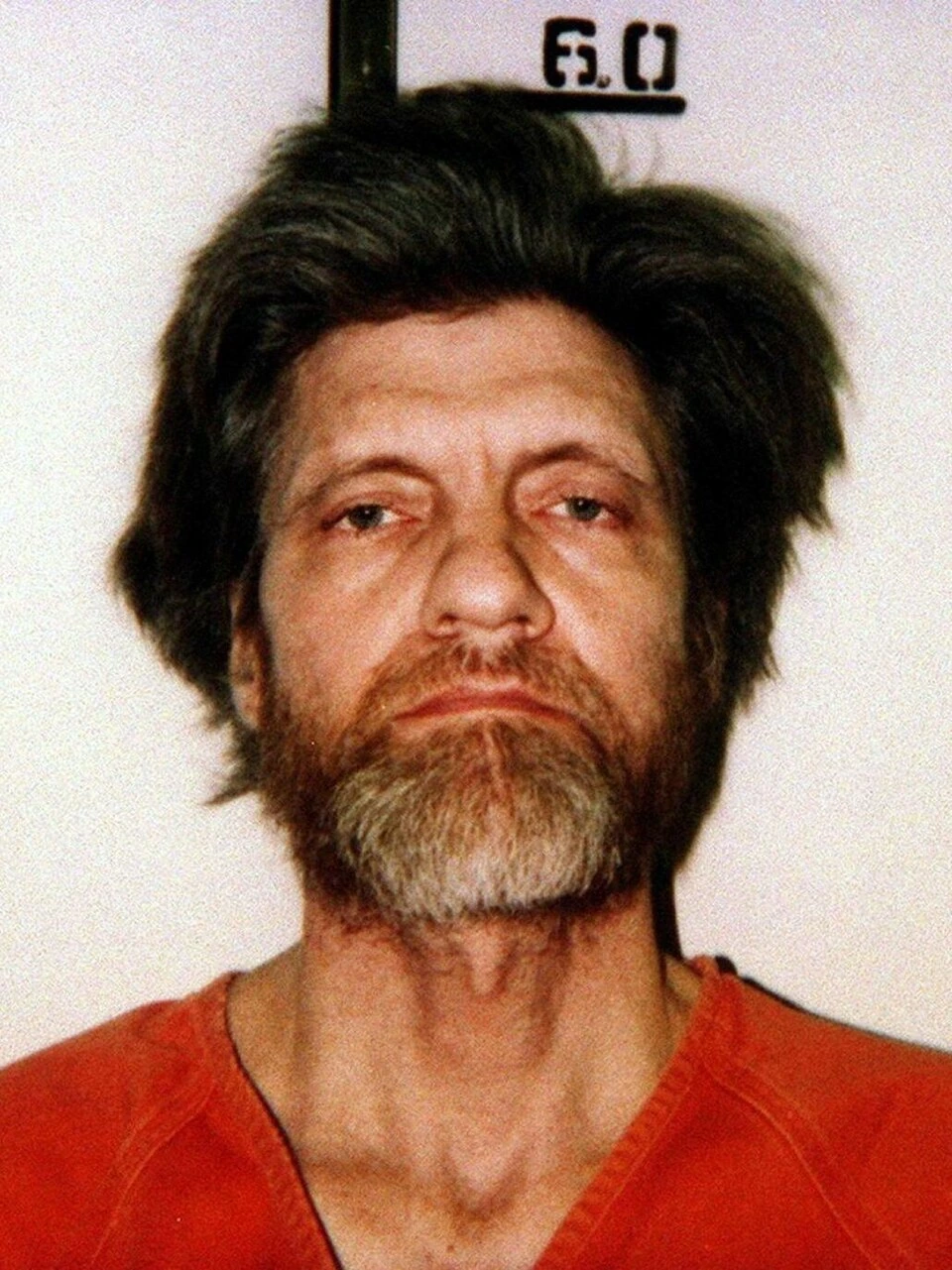
Who Ted Kaczynski actually is (and why disambiguation matters)

Theodore John Kaczynski was born on May 22, 1942, and died on June 10, 2023, while in federal custody at FMC Butner in North Carolina. He is universally known as the "Unabomber," the codename the FBI used for the bomber who killed 3 people and injured 23 others in a mail-bomb campaign that stretched from 1978 to 1995. He is not to be confused with his younger brother, David Kaczynski, who was instrumental in alerting the FBI to his identity. There is also a Wikipedia disambiguation entry for "Ted K" that refers to an entirely different subject, and net-worth sites have been known to pick up irrelevant data when someone searches for "Ted" as a standalone term. If you have seen a figure of roughly $3.2 million or $4.4 million attached to "Ted," that estimate is from a page about a completely different entity, not the Unabomber.
When researching wealth for figures like Kaczynski, it is worth checking whether a given net-worth page is actually about the person you are looking for or whether it has been auto-generated around a shared first name or partial surname. The UNABOM case files at the FBI and the Cornell Law School LII background page both use the full name "Theodore John Kaczynski" and the alias "Unabomber" precisely to avoid this kind of confusion.
What the estimates actually say (and why none of them are reliable)
Here is a quick snapshot of what different sites have published, so you can see the spread:
| Source | Estimate | Methodology disclosed? | Confidence level |
|---|---|---|---|
| NetWorthList | $15 million | No | Very low |
| FactMandu | $1 million – $5 million | No (range guessing) | Very low |
| MyNewsGh | $2 million | No | Very low |
| Primary court records | -$15,026,000 (restitution owed) | Yes (9th Circuit order) | High |
The only figure with a verifiable paper trail is the restitution order: a 9th Circuit court ruling confirmed Kaczynski was ordered to pay $15,026,000 to identified victims, a number also referenced in CNN reporting. Every positive "net worth" figure on content-farm sites appears to be either a wild guess, a misattributed estimate, or a recycled number with no auditable source behind it. None of those sites link to financial statements, tax filings, estate inventories, or any primary record.
Income sources and financial drains across his life

The few ways money came in
- Academic salary: Kaczynski earned a legitimate income as an assistant professor of mathematics at UC Berkeley from 1967 to 1969. This was a real, if modest, income stream for two years.
- Occasional paid work: After leaving academia, he took sporadic low-wage jobs (factory work, construction laborer) through the early 1970s before retreating to his rural Montana cabin.
- Book royalties: When Kaczynski's writings were published, early reporting noted that on the day of his indictment in 1996, a publisher announced first royalties of $1,207.40 owed to him. That is not a typo. Those proceeds were legally redirected to victims under federal law.
- Prison wages: Federal inmates assigned to work details earn extremely modest pay under programs governed by 28 CFR § 345.51. This amounts to cents per hour and would be negligible even over decades.
The much larger financial drains

- Court-ordered restitution of $15,026,000, a debt he had no realistic means of satisfying from prison.
- Seizure and court-ordered auction of personal property: a 2011 online auction of his belongings (including personal effects from the cabin raid) brought in approximately $190,000, with proceeds directed to victims after commission.
- Legal prohibition on profiting from notoriety: federal Son of Sam-style statutes and specific court orders meant any royalties from his writings, media deals, or other publicity-related income had to be redirected to victims rather than flowing to him personally.
- Cost of federal incarceration (to the government, not him directly), but this illustrates the total absence of personal asset accumulation during his post-1996 life.
A timeline of when wealth could (and could not) have been built
| Period | Activity | Financial implication |
|---|---|---|
| 1942–1967 | Childhood, Harvard undergrad, Michigan PhD | No independent income; scholarship support |
| 1967–1969 | Assistant professor, UC Berkeley | Modest academic salary; only real earned-income window |
| 1969–1978 | Left academia; odd jobs; moved to Montana | Minimal income; subsistence living in off-grid cabin |
| 1978–1995 | Active bombing campaign; living off the grid | No legitimate income; occasional small wages from manual labor |
| 1995 | Manifesto published (Sept. 19, 1995) | Media publication, no personal profit |
| 1996 | Arrested April 3, 1996; indicted; $1,207.40 first royalty noted | Royalties immediately redirected to victims |
| 1998 | Pleaded guilty; sentenced to life without parole | All assets subject to $15,026,000 restitution order |
| 2004–2011 | Court-ordered auctions of personal property | Property sold; proceeds to victims (~$190,000 raised) |
| 1998–2023 | Federal incarceration | Prison wages only; no asset accumulation possible |
| June 10, 2023 | Died at FMC Butner | Estate likely insolvent given outstanding restitution |
The media, books, and royalties angle
Kaczynski's manifesto, "Industrial Society and Its Future," was published in the Washington Post and New York Times on September 19, 1995, as part of negotiations intended to end the bombing campaign. The publication was not a commercial book deal that generated personal income for him. Later, when his writings were published more formally, The Guardian and Fifth Estate both reported explicitly that royalties would go to victims and their families, not to Kaczynski. A Fox News report reinforced this framing, noting that courts ordered the sale of his writings specifically to benefit victims rather than the author.
This is a critical point for net-worth calculations: some sites may count published works as a positive asset or revenue stream. That reasoning is incorrect here. The profit restriction is not a technicality; it was explicitly enforced through court orders that treated any proceeds from his notoriety as subject to the restitution lien. The $1,207.40 royalty figure from 1996 is perhaps the only documented instance of income attributed to him personally from publication, and even that was in the context of it being redirected.
How net worth estimates are actually built (and why this case is different)
On a standard net-worth reference page, the calculation draws on a mix of public records: property filings, business registrations, known salaries, reported endorsement deals, court documents, and aggregated media reporting. For a celebrity or athlete, you can cross-reference multiple datapoints and arrive at a reasonable range even without seeing a tax return. The problem with Kaczynski is that almost every layer of that standard approach collapses. He owned no real estate in his name. He had no business interests. He had no investment portfolio. His one significant asset, the Montana cabin, was on land he did not own. FBI artifact information on the Unabomber cabin reports that on April 3, 1996, FBI agents arrested Theodore “Ted” Kaczynski at his cabin in Montana blank" rel="noopener noreferrer">Montana cabin. His personal property was auctioned by court order. In the court-approved process described in the decision involving USA, et al v. Kaczynski, seized personal property was to be sold or otherwise disposed of to help enforce restitution obligations blank" rel="noopener noreferrer">His personal property was auctioned by court order.. His writings produce no personal income. There are no auditable financial statements anywhere in the public record.
What you are left with is a negative net worth (restitution far exceeds any assets ever attributed to him) and a confidence level that is essentially rock bottom for any positive figure you might find online. Sites like NetWorthList, FactMandu, and similar content aggregators do not typically disclose their methodology, and when you trace their numbers back, there is no primary record to find. This is a pattern that shows up across net-worth estimation sites generally: for mainstream celebrities with long public financial histories, aggregated estimates can be reasonable; for controversial or non-commercial figures, they frequently devolve into speculation or outright fabrication.
Ethics and legal context when researching this kind of wealth profile
It is worth pausing on why this search exists and what responsibilities come with answering it. Kaczynski's case is studied by researchers, journalists, legal scholars, and students of radicalization and criminal psychology, and understanding the financial dimension of his life is a legitimate part of that picture. The absence of wealth, the court-ordered restitution, the legal prohibition on profiting from notoriety: these are real, documented facts that help tell the full story of a case with serious victims.
Where the ethics get complicated is when net-worth sites publish inflated, unsupported figures that either inadvertently glamorize a convicted mass killer or mislead readers about the financial reality of criminal cases. If you are looking for the ed kowalczyk net worth figure, it is best to verify any claim against primary sources rather than relying on content-farm estimates. Son of Sam laws exist precisely because society has made a collective judgment that people should not profit from the notoriety of violent crimes. Repeating an unverified $15 million figure without context undermines that principle. If you are researching this topic for academic, legal, or journalistic purposes, the court filings, FBI case materials, and contemporaneous news reporting are the only sources worth citing. The net-worth aggregator pages should not be treated as credible references here. This is why searches for killer Kowalski net worth are often pulled from unreliable guessing rather than verifiable records.
For comparison, when you look at net-worth profiles for other individuals in this reference database, the methodology question matters just as much, even when the subject is far less controversial. The difference with Kaczynski is that the legal and factual record is unusually clear: the restitution order is documented, the asset auctions are documented, and the profit restrictions are documented. That clarity actually makes this an easier case to evaluate than many profiles, even though the answer is simply "effectively nothing."
FAQ
Why do some sites claim Ted Kaczynski had millions in net worth, when court restitution was so large?
Those numbers usually come from misidentification, recycled “first-name only” search data, or unsupported guesses that treat “fame” as income. In Kaczynski’s case, the restitution order and the auction of personal property are the only figures with a traceable paper trail, so any multi-million “net worth” claim should be treated as non-credible unless it cites a primary financial record.
What would a legitimate net-worth calculation require in a case like this?
You would need identifiable assets owned by him personally (bank accounts, titled property, business interests), evidence of any personal earnings, and proof that those proceeds were not subject to restitution. If a page cannot point to audited statements, tax filings, probate inventories, or specific court-documented asset values tied to him personally, the estimate is not doing a real accounting.
Could the Montana cabin or any property linked to him be counted toward net worth?
Only assets titled in his name should count for a standard net-worth tally. If a major item was located on land he did not own, it should not be treated as personal equity, and court-ordered auctions of personal property further reduce what could remain with him.
Do royalties or book sales from Kaczynski writings increase his net worth?
Not in the way most net-worth sites assume. Court-ordered restrictions and restitution-focused distribution mean proceeds tied to notoriety were treated as subject to victims’ compensation rather than as personal enrichment, so counting “publication income” as if he personally benefited is misleading.
If he only received a small royalty amount in 1996, does that change the conclusion?
It does not meaningfully change the overall picture. Even the documented royalty amount was in the context of redirection and does not outweigh the restitution obligation and the liquidation of assets ordered by the court.
Could his death change restitution, asset liquidation, or what a net-worth page should say?
Death typically does not erase restitution obligations already imposed by the court. For net-worth style summaries, the key point is that the account balance after restitution and auctions was not positive, and post-death updates on aggregator sites often continue repeating unverifiable figures rather than recalculating from primary records.
Are there any “reasonable range” estimates that could be defended for Ted Kaczynski’s wealth?
A defensible range is essentially “effectively none,” because the restitution order exceeds any small, documented personal income, and major standard inputs for a net-worth model (assets, investments, ongoing earnings) are not present. If an estimate cannot demonstrate how it offsets restitution using traceable assets, it is not a range, it is speculation.
How can I tell if a net-worth page is about the right person (without mixing him up with someone else)?
Check whether the page uses the full name “Theodore John Kaczynski” and the alias “Unabomber,” not just “Ted K” or “Ted.” Also look for case-specific details like federal prison custody and the Unabomber context. If the page never ties its numbers to the Unabomber case, it is likely auto-generated around an unrelated person.
What is the best way to verify claims about his finances for academic or journalistic work?
Start with court documents tied to restitution and property disposition, then corroborate with contemporaneous reporting that explicitly discusses those orders. If a net-worth site is the only source repeating a figure, you should either find the underlying primary record or exclude the figure from your analysis.
Do “Son of Sam” laws matter when discussing Kaczynski net worth?
Yes. These laws exist to limit a convicted person’s ability to profit from the notoriety of violent crimes, which directly affects how you interpret publication-related and media-related proceeds. A net-worth approach that ignores those restrictions will systematically overstate personal wealth.
Killer Kowalski Net Worth: Estimated Range and Sources
Get a low to high estimate of Killer Kowalski net worth and the sources behind wrestling earnings, investments, and asse