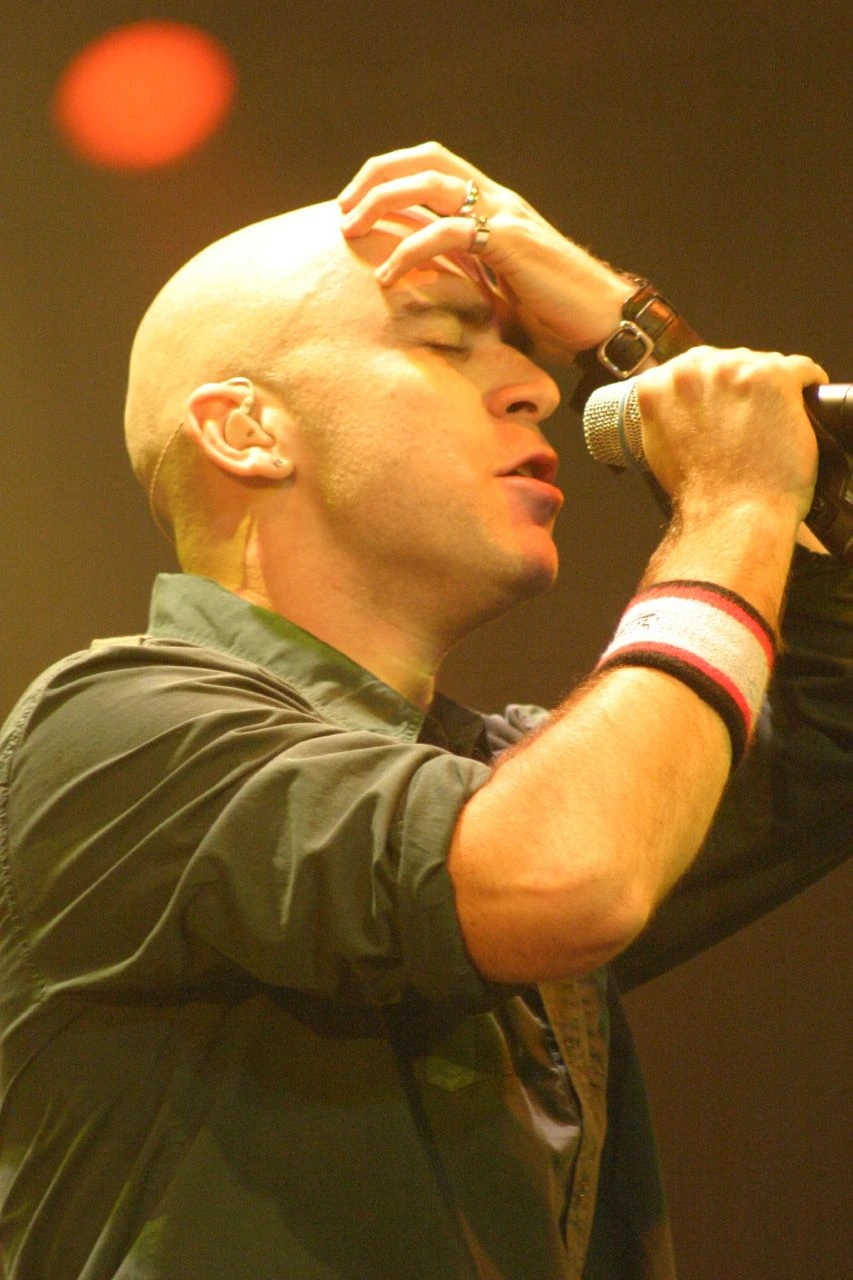
Who is Ed Kowalczyk and why are people searching his net worth?

Ed Kowalczyk is the lead singer, primary lyricist, and main songwriter of the rock band Live, a group that sold tens of millions of records through the 1990s and early 2000s on the back of albums like Throwing Copper (1994) and Secret Samadhi (1997). If you know the song "Lightning Crashes" or "I Alone," you know his voice. His name comes up in net worth searches for a pretty straightforward reason: people who grew up with Live are curious whether that level of mainstream rock success actually translated into lasting wealth, especially after a messy split from the band in 2009, a solo career, a legal dispute over the Live trademark, and an eventual reunion. The answer, as with most rock musicians from that era, is more complicated than a single number suggests.
The current net worth estimate and what to make of it
The most frequently cited figure across multiple net worth databases is $8 million. CelebrityNetWorth and NetWorthPost (which was updated as recently as July 2025) both land on that number, and a third aggregator updated in October 2025 also puts him at approximately $8 million. That consistency across independent sites is worth something, even if none of them publish a detailed breakdown of how they got there. Because hunter kowald net worth is often discussed in similar terms, it can help to look at how estimates are built and why they vary by source.
There are outliers on both ends. CelebsMoney puts his net worth somewhere in the $100,000 to $1 million range, which seems implausibly low given Live's documented commercial run. At the other extreme, CineNetWorth claims around $25 million as of 2025, which looks inflated without strong evidence to support it. When you see that kind of spread, the middle cluster is almost always the more defensible estimate. The working figure I'd use is $8 million, treated as a reasonable midpoint estimate rather than a precise number.
How celebrity net worth is actually calculated

Net worth, at its core, is assets minus liabilities. For a musician like Kowalczyk, that means adding up everything he owns or controls that has monetary value, then subtracting debts, legal settlements, or other financial obligations. The problem is that almost none of that information is public for a private individual, even a famous one. So every number you see on a net worth site is an estimate built from a mix of verifiable data points and educated inference.
What actually gets counted in these estimates typically includes: music royalties (publishing and master recording income), touring revenue, album sales, merchandise, any real estate that's been publicly documented, and business interests. What often gets missed or underweighted are liabilities like mortgages, outstanding legal fees from disputes (Kowalczyk's trademark lawsuit being a relevant example), management and agent commissions, and taxes on touring income. The result is that most published estimates skew high because they're easier to count the income side than the expense side.
The career arc that built (and complicated) his wealth
The Live years: where the foundation was built

Live's commercial peak was the mid-to-late 1990s. Throwing Copper went multi-platinum in multiple countries and generated years of touring revenue on top of record sales. For context, the mid-90s rock touring circuit was genuinely lucrative in a way that's hard to replicate today: arena tours, heavy radio airplay, and robust CD sales all feeding the same financial engine at the same time. As the band's main songwriter, Kowalczyk would have held publishing rights to a catalog that continues generating royalties decades later every time a Live song appears in a film, TV show, commercial, or streaming playlist.
The 2009 departure and its financial fallout
Kowalczyk left Live in 2009, and the split was not clean. A company called United Action Front Unlimited, which held the Live trademarks, sued him for using the band's name in connection with his solo work. That kind of lawsuit creates real financial drag: legal fees, potential settlement costs, and restrictions on how he could market himself. It also disrupted touring momentum during a period when he was trying to establish himself as a solo act. His debut solo album, Alive, came out in 2010, generating singles "Grace" and "Stand" and a follow-up EP called The Garden in 2012, but solo career earnings almost certainly came in below what he was earning as the frontman of a major rock band.
The reunion and what came after
blank" rel="noopener noreferrer">Kowalczyk reconciled with the founding members of Live in December 2016. The band resumed touring, including runs in Australia and a joint tour with Counting Crows, and released new digital singles and an EP that same year. That reunion represented a meaningful income recovery: Live's catalog still commands a dedicated audience, and reunion tours for 90s rock acts tend to do solid business. The story hit another bump in 2022 when Chad Taylor, Pat Dahlheimer, and Chad Gracey left the band amid reported acrimony, creating fresh uncertainty about Live's future touring activity and revenue. As of 2026, Kowalczyk's touring page still shows active scheduling, which means live performance income remains part of his current financial picture.
Breaking down where the money comes from

- Catalog royalties: Live's back catalog (especially Throwing Copper and Secret Samadhi) continues generating publishing and streaming income. As the primary songwriter, Kowalczyk holds a significant share of those publishing rights.
- Touring revenue: Both the solo years and the Live reunion generated live performance income. His active tour page as of 2026 indicates this is still ongoing.
- Album and single sales/streams: Decades of catalog plus the solo releases contribute ongoing, if modest, streaming revenue.
- Merchandise: Standard for any touring artist with a recognizable name and catalog.
- Potential sync licensing: Live songs placed in TV, film, and advertising continue to generate income, often without requiring any active participation from the artist.
There's no publicly documented evidence of major real estate holdings, equity investments, or significant business ventures outside of music for Kowalczyk. That doesn't mean they don't exist, just that they haven't been reported. His wealth profile looks like that of a career musician: heavily catalog-dependent, with touring as the recurring income driver.
Why different sites quote such different numbers
| Source | Estimate | Last Updated | Likely Methodology |
|---|
| CelebrityNetWorth | $8 million | Not publicly disclosed | Aggregated estimate, no detailed breakdown shown |
| NetWorthPost | $8 million | July 2025 | Aggregated estimate |
| Third aggregator (Turkish-language site) | ~$8 million | October 2025 | Aggregated estimate |
| CelebsMoney | $100K–$1M | 2025 | Formula-based, possibly underweights catalog royalties |
| CineNetWorth | ~$25 million | 2025 | Outlier, no supporting breakdown provided |
| TheRichest | Not confirmed in available data | Unknown | Independent database entry |
The variance comes down to methodology, and most of these sites don't publish theirs. Some use formula-driven models that weight recent visible income (new album releases, current tour volume) and can significantly underestimate a musician whose main value sits in a 30-year-old catalog. Others may start with an older estimate and adjust upward over time without rigorous recalculation. The $25 million figure from CineNetWorth has no publicly documented support and likely reflects either a generous upward adjustment or a conflation with the overall Live band's historical earnings rather than Kowalczyk's personal net worth.
The $100K to $1M range from CelebsMoney goes the other direction and probably underweights his publishing catalog. A musician who co-owns the publishing rights to "Lightning Crashes" alone would likely generate enough annual royalty income over decades to make a sub-$1M net worth implausible unless he had severe undisclosed liabilities. The $8 million cluster from three independent sources, updated across 2024 and 2025, is the most defensible working estimate.
How to track and verify his net worth going forward
No single site gives you a perfect, auditable number, but you can build a reasonably informed picture by triangulating a few approaches. If you're also trying to compare with other musicians, checking the killer kowalski net worth figures can help you see how site-by-site estimates differ. If you want to see how these estimates compare, review the latest reporting around Ted Kaczynski net worth. First, check multiple databases rather than stopping at one.
If three or four independent sources cluster around the same figure (as they do at $8 million for Kowalczyk), that's a stronger signal than any one site's claim. Discard outliers that are missing a methodology explanation, especially when they're dramatically higher or lower than the consensus.
Second, pay attention to update dates. A net worth estimate from 2018 for an artist who had a major career event in 2022 (like the Live member departures) is less reliable than one updated in 2024 or 2025. Prioritize sources that timestamp their revisions.
Third, follow career signals directly. Kowalczyk's own website tour page is the fastest way to assess whether he's actively touring, which is the most direct current income driver for an artist at his career stage. New releases, licensing deals announced in entertainment press, or legal filings (like the trademark dispute covered by Courthouse News Service) can all move the real number in ways that aggregator sites take months or years to reflect.
- Check two or three net worth databases and look for consensus, not a single number.
- Prioritize estimates with recent update dates (2024 or later for current accuracy).
- Discard outliers that don't provide at least a basic methodology or income breakdown.
- Monitor his official tour schedule as a proxy for current earned income.
- Watch entertainment news for catalog licensing deals, new releases, or legal developments that could shift the estimate meaningfully.
- Treat any published figure as a range, not a precise sum. For Kowalczyk, a range of roughly $6 million to $10 million reflects the honest uncertainty in the available data.
One thing worth keeping in mind: net worth is a snapshot, not a verdict. Kowalczyk's financial position has clearly moved through several phases, from major-label rock star in the 90s to solo act in legal dispute with his former band, to reunited frontman, to now navigating another lineup change. Each of those shifts affects the number, and the real figure on any given day is something only he and his accountant know.
The $8 million estimate is the most evidence-supported public guess available right now, and it's reasonable to use it as a reference point while treating the specific dollar amount with appropriate skepticism. When people search for the Kowalski family net worth, they are usually looking for the kind of rounded estimate and context this article provides.