
Rem Koolhaas's net worth is most commonly estimated somewhere between $1.7 million and $6 million, depending on which aggregator site you consult. That's a wide range, and the honest answer is that no public source has audited his finances. The most defensible working estimate as of May 2026 sits around $5 to $6 million, accounting for his founding equity in OMA, decades of major commissions, and supplemental income from publishing and speaking, but treat that number as an informed inference rather than a verified fact.
Rem Koolhaas Net Worth: Estimate Range and How It’s Derived

Marcus Holloway
14 May 2026
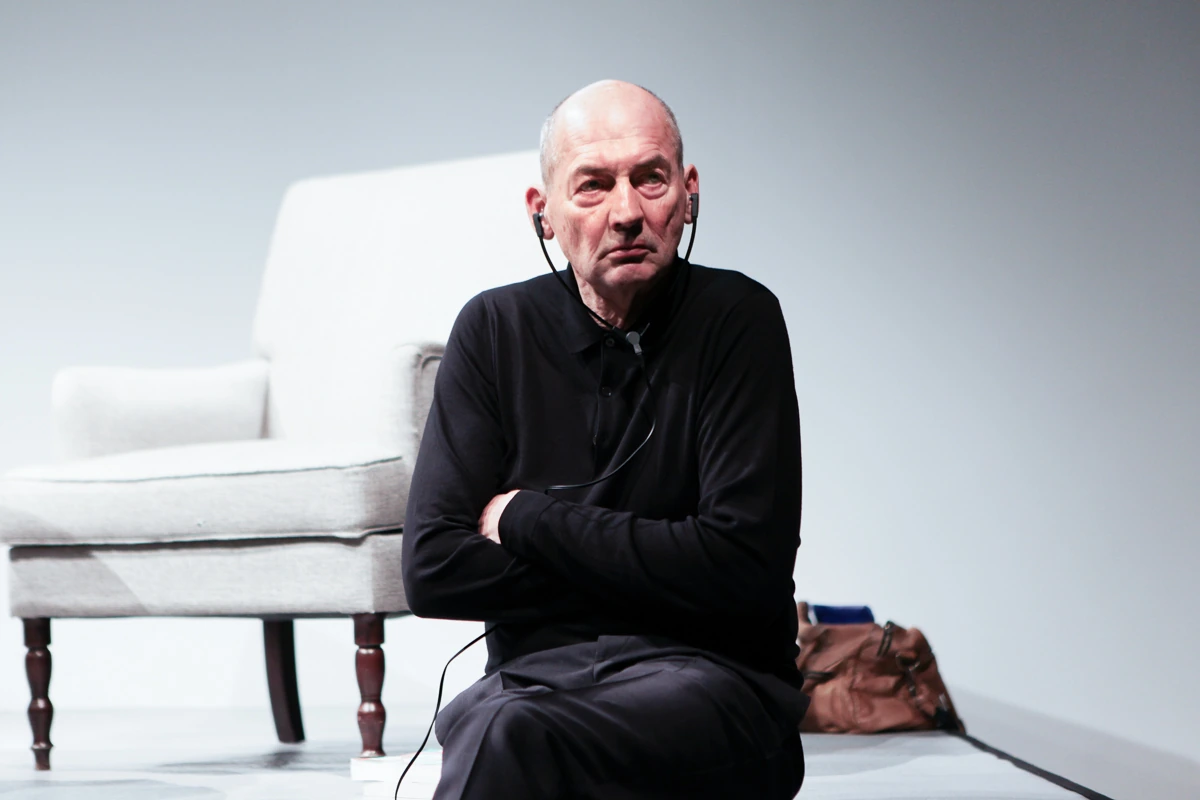
The numbers floating around right now

The two most commonly cited figures come from low-to-mid authority aggregator sites. One source, NetWorthList, puts the number at $1.7 million without any disclosed valuation date or methodology. Another, Famous People Today, places it at $6 million as part of a roundup of the world's richest architects, again without exposing how that figure was derived. WealthyGorilla, a site that does publish net worth profiles for many public figures, doesn't appear to maintain a dedicated Koolhaas profile at all, so there's no third anchor point from a higher-traffic source.
That spread, from $1.7 million to $6 million, is typical for architects who run private firms. Unlike a musician with streaming revenue or a CEO with disclosed stock compensation, an architect-founder's wealth is deeply embedded in a private partnership structure that doesn't have to report anything publicly. So every estimate you find is working from the outside in.
How net worth estimates get built in the first place
Sites that publish celebrity net worth figures generally work from a mix of publicly available signals: career earnings inferred from known project fees, disclosed book deals, speaking rates, award winnings, and any ownership interests that can be triangulated from company filings or press coverage. CelebrityNetWorth, one of the better-known aggregators, describes its process as gathering information from sources thought to be reliable, which is honest language for 'we're estimating, not auditing.' Their own disclaimer makes clear these are not court-grade or certified figures.
When a subject runs a private company (as Koolhaas does with OMA), the challenge becomes valuing that equity. Forbes uses a comparable-company approach for private wealth, pairing estimated revenues or profits against price-to-revenue or price-to-earnings multiples from similar public firms. That works reasonably well for large private businesses, but it still relies on revenue estimates that are themselves inferred, not disclosed. For a firm like OMA, which operates across multiple countries and takes on wildly different project types, applying a single multiple is inherently imprecise.
Where Koolhaas's wealth actually comes from
OMA: the core asset

[Rem Koolhaas co-founded OMA](/ted-kotcheff-net-worth/oren-koules-net-worth) (Office for Metropolitan Architecture) in 1975 alongside Elia Zenghelis, Zoe Zenghelis, and Madelon Vriesendorp. As one of the founding partners, he likely holds a meaningful equity stake in the firm, which is the single biggest driver of any net worth estimate. OMA is now led by multiple partners, and Koolhaas remains listed as a principal partner on the firm's official site. Private architecture partnership equity isn't traded on an exchange, so its value is inferred rather than observed, but for a globally recognized firm with a full project pipeline, that stake is almost certainly the largest line item in any wealth model.
Major project commissions
Architecture fees on large public commissions typically run between 8 and 15 percent of total construction cost, though the actual split between the firm and individual partners isn't public. The Seattle Central Library, one of OMA's landmark U. S. projects, had a publicly cited construction cost of roughly $165 million, with Koolhaas listed as a partner in charge.
The Seattle Central Library page (an OMA project) is a commonly cited reference for the project’s publicly listed construction cost of about $165. 9 million construction cost of roughly $165 million.
OMA's New Museum expansion in New York, currently active as of early 2026 and documented in Wallpaper's March 2026 coverage, brings the museum's footprint to around 120,000 square feet in a collaboration with Corgan. These are the kinds of projects that generate substantial firm-level revenue, and a founding partner's share of that flows into personal wealth over time, but no source has ever itemized what Koolhaas personally receives per project.
Publishing, lectures, and media
Koolhaas is unusually prolific as an architecture writer. 'Delirious New York' (1978) and 'S,M,L,XL' (1995) are both still in print and widely assigned in architecture schools, which means long-tail royalty income that most architects never see. Book advances in publishing are paid upfront against future royalties and only generate ongoing income once the advance is 'earned out' through sales, both of those titles have had decades to do so. Speaking fees at high-profile conferences and universities add another layer, typically ranging from $25,000 to well over $100,000 per engagement for someone at his visibility level. None of these figures are disclosed publicly, but they collectively represent a real secondary income stream.
Awards, grants, and institutional recognition
Koolhaas won the Pritzker Architecture Prize in 2000, which comes with a $100,000 award. He has also received numerous honorary doctorates, the Golden Lion at the Venice Architecture Biennale (which he directed in 2014), and various professional honors. These don't move the needle much on net worth in isolation, but they signal the kind of sustained institutional standing that keeps speaking invitations and high-value commissions flowing. Prestigious awards are better understood as wealth multipliers (they increase future earning capacity) than as direct wealth sources.
What inflates and deflates the estimates
The $1.7 million figure is probably too conservative. It seems to undervalue the compounding effect of 50 years of practice, a founding stake in a globally active firm, and ongoing royalty and speaking income. A figure that low would be more consistent with a mid-career architect at a smaller firm, not the co-founder of one of the most recognized practices in the world.
The $6 million figure is more plausible but still modest by the standards of successful founders in comparable professional services fields. It may actually be understated if OMA's equity value is meaningful, or it may be overstated if the private partnership structure distributes profits rather than accumulating equity on a balance sheet. Architects who build and hold real estate personally can push net worth much higher; those who take their returns as income and spend or reinvest them may show lower balance-sheet wealth despite high earnings.
Exchange rate effects matter too. OMA is headquartered in Rotterdam, the Netherlands, and bills work in euros across many international projects. Net worth estimates compiled in U.S. dollars will shift with EUR/USD movement, which has been volatile over the past two years. A figure published in 2023 or 2024 and not updated since is already stale in currency terms alone.
Why estimates vary so much across sites
| Factor | Why it creates variance |
|---|---|
| Private firm ownership | OMA doesn't file public financials, so equity value is modeled, not observed |
| No disclosed compensation | Neither salary nor profit-share from OMA has ever been publicly stated |
| Currency fluctuation | Euro-denominated income shifts USD estimates without any change in actual wealth |
| Timing of updates | Sites rarely timestamp their figures; a 2021 estimate may still appear in 2026 search results |
| Valuation assumptions | One site may use a revenue multiple; another may only count confirmed disclosed income |
| Book/speaking income opacity | Royalties and fees are private contracts; sites estimate these differently or ignore them |
The core issue is that OMA is a private partnership, and Koolhaas has never disclosed his compensation or equity stake in any public forum. If you're specifically looking up Rem Koolhaas's net worth, it's worth cross-checking which valuation approach each site uses. Without that anchor, every net worth model is working from assumptions. In that context, the same uncertainty is exactly what drives the wide swing in estimates for Kees Koolen net worth Koolhaas has never disclosed his compensation or equity stake. Two analysts using different revenue multiples or different assumptions about personal versus firm-retained earnings will land on very different numbers, and both can claim they're being reasonable.
How to check the latest figure yourself

If you want to sanity-check any number you find, here's a practical approach. Start by noting whether the source provides any valuation date, an undated figure could be years old. Then look for what inputs the site actually used: does it mention OMA equity, book income, or speaking fees, or is it just asserting a number? The more specific the breakdown, the more seriously you can take it.
- Search for any disclosed ownership interest in OMA or affiliated entities in press coverage or official company filings in the Netherlands (where OMA is registered)
- Check for confirmed book contract or advance disclosures in publisher announcements or interviews — these are rare but occasionally surface
- Look for recent speaking fee disclosures from universities or conferences, which sometimes post honorarium ranges
- Watch for news of large new OMA commissions, which are the most likely trigger for a meaningful upward revision to wealth estimates
- Note the publication date of any net worth page you consult — if it hasn't been updated in 12 or more months, treat the figure as a starting point, not a current fact
The reality is that for architects running private practices, net worth figures will always be softer than those for publicly traded company executives or celebrities with disclosed contracts. That's true for Koolhaas and it would be equally true for other architecture-adjacent figures whose wealth is tied up in private professional structures. For a similarly private, partnership-based career, XAVIER EIKERENKOETTER net worth estimates tend to be treated with the same caution as other non-public professional wealth models.
The best any aggregator site (including this one) can do is be transparent about that limitation, present a defensible range, and flag when the underlying inputs change. As of May 2026, the most reasonable range for Rem Koolhaas sits between $5 million and $6 million, with the caveat that new large project wins or a change in OMA's partnership structure could shift that materially in either direction.
FAQ
Why do Rem Koolhaas net worth estimates differ so much between sites?
Most sites use outside-in assumptions, they do not have audited personal balance sheets. The biggest driver is how they treat his OMA partnership equity versus taking profits as income, two models can both look “reasonable” while producing very different totals.
Can I verify Rem Koolhaas net worth using public financial records?
Not in the usual way for a public-company executive. For a private partnership like OMA, there is typically no direct public disclosure of an individual partner’s equity value or compensation, so verification usually comes down to indirect signals and valuation assumptions.
What valuation method do net worth aggregators most likely use for OMA equity?
Many rely on comparable-company multiples applied to estimated firm performance, then back into an implied personal share. That approach is sensitive to revenue or profit estimates for OMA and to the assumed share of equity or retained earnings attributable to Koolhaas.
Do royalties from Delirious New York and S,M,L,XL meaningfully change the net worth range?
They can contribute, but they usually shift totals only at the margins compared with partnership equity. Royalty income is typically long-tail and can be steady, yet most sites cannot confirm sales volumes, royalty rates, or whether advances were earned out, which limits how precisely it gets modeled.
Are speaking fees and awards included in most Rem Koolhaas net worth calculations?
Some models include them as estimated earnings, but awards themselves are usually treated as “indirect wealth multipliers” rather than large standalone income. Speaking fees are more likely to be modeled than awards because speaking engagements are repeatable, even then the estimates depend on assumed rates and frequency.
Could a low or high estimate reflect whether Koolhaas holds wealth inside OMA versus taking it out as salary?
Yes. If profits are distributed regularly, personal net worth may look lower on paper even with strong annual earnings. If equity or retained value accumulates inside the partnership, personal net worth estimates can rise, so differences in assumptions about distribution policy matter.
How do currency changes affect Rem Koolhaas net worth figures reported in USD?
OMA operates internationally and bills in euros, so any USD-converted estimate can move even if underlying wealth is stable. If a site does not update the currency conversion or the valuation date, the number can become stale quickly, especially after volatile EUR to USD periods.
What’s a quick checklist to sanity-check a Rem Koolhaas net worth number you see online?
Check whether the site provides a valuation date, look for a breakdown of inputs (equity, book income, speaking, or royalties), and note whether they explain the method or just state a number. A more detailed methodology that ties to identifiable income streams is usually more useful than an undated “single figure” claim.
If I see a much higher Rem Koolhaas net worth claim than $6 million, what should I question first?
You should question whether the model assumes real-estate holdings, publicly identifiable investments, or personal asset ownership that aggregators cannot confirm. For most architects whose wealth is tied to private practice equity, outsized claims often come from aggressive equity valuation assumptions or unsubstantiated private asset estimates.
Would new major projects or a change in OMA’s partnership structure change the estimate immediately?
It could, but only indirectly and not instantly. Project wins affect future revenues, which then influence equity value over time, and partnership structure changes can alter profit distribution and equity accumulation, both of which can shift modeled net worth in a meaningful way.
Is there a reliable way to estimate his net worth outside of aggregators?
A rough approach is to estimate OMA’s likely annual profitability, apply a conservative valuation multiple for private professional services, then model a plausible range for personal partner equity or profit-share. Even then, the result is an inference, not a validation, because partner-specific ownership and distribution terms are not publicly itemized.
Next Article
Oren Koules Net Worth: Estimate, Sources, and How to Verify
Step-by-step Oren Koules net worth estimate, what counts, why sources differ, and how to verify today.