
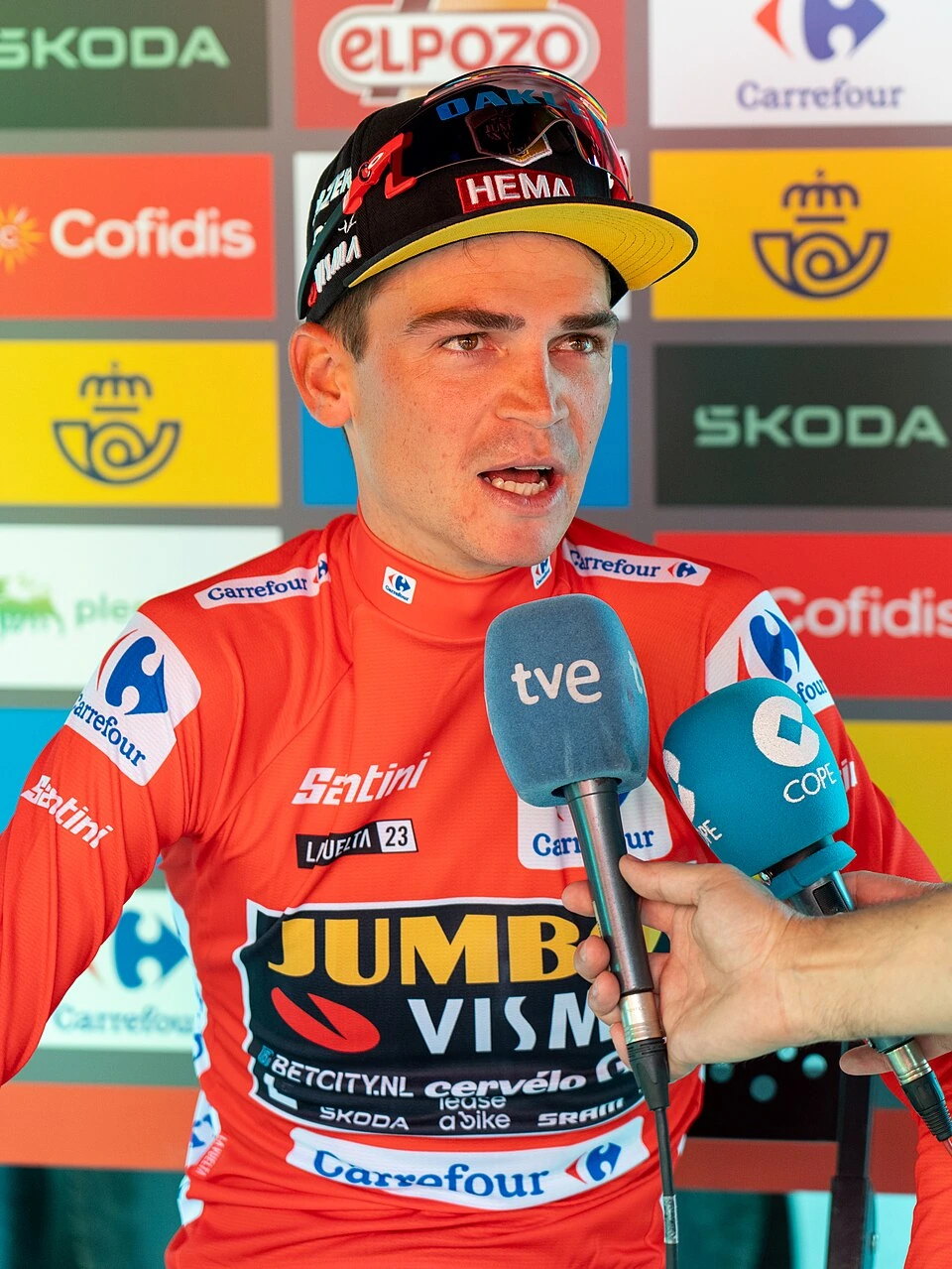
As of April 2026, Sepp Kuss's estimated net worth sits somewhere in the range of $3 million to $5 million. That range reflects his multi-year contract with Team Visma | Lease a Bike (secured through 2027), his 2023 Vuelta a España GC win and the prize money that came with it, Tour de France stage bonuses, and a growing endorsement profile that accelerated sharply after his Grand Tour victory. No official figure exists, and different sources will publish different numbers, but that range is defensible when you work through the income categories systematically. If you want a different related example of how these estimates are framed, look at edmund kissner net worth as a comparison point for the same income-and-assets logic.
Sepp Kuss Net Worth: Estimated Earnings and Income Breakdown

Marcus Holloway
25 Apr 2026
What net worth estimate to expect and why the numbers vary

The $3 million to $5 million range isn't arbitrary. It's built from three main inputs: annual salary from his team contract, cumulative race prize money across his career, and endorsement/sponsorship income. Each of those carries real uncertainty. Cycling team salaries at the WorldTour level are not publicly disclosed. Prize money is public but gets split between rider and team in proportions that vary by contract. Endorsement deals are rarely announced with dollar amounts. So any published net worth figure, including this one, is an informed estimate, not an audited balance sheet.
Different net-worth databases often disagree on figures like this because they weight these categories differently. Some sites anchor entirely on salary and ignore prize-money splits. Others overcredit prize money by not accounting for the share that goes back to the team. A few include endorsement projections that are really just guesses. The honest answer is that the true figure could be somewhat lower if his endorsement income is still modest, or higher if his contract extension came with a significant raise post-Vuelta. Both scenarios are plausible.
What actually counts toward a cyclist's net worth
Net worth means total assets minus total liabilities, not just annual income. For a professional cyclist like Kuss, the asset side typically includes accumulated savings from salary (after tax and living expenses), any race prize money he personally retains, the value of endorsement contracts paid out over time, and any personal investments or property. Liabilities are harder to observe publicly, but would include taxes, agent fees (typically 10 to 15 percent of contracts), and personal expenses.
- Base salary from the team contract (paid monthly or in installments, taxed at source country rates)
- Performance bonuses written into contracts (tied to GC placements, stage wins, or team objectives)
- Share of race prize money allocated per internal team agreements
- Personal endorsement and sponsorship fees from brands separate from the team
- Merchandise royalties or appearance fees (smaller and less consistent)
- Personal savings, investments, or property purchased during the career
The distinction between net worth and annual income trips a lot of people up. A good race year inflates the income figure for that year, but net worth is cumulative. Kuss's net worth today reflects nearly a decade of professional racing earnings minus everything he's spent along the way.
Sepp Kuss's income breakdown: salary, bonuses, and prize money

Team salary
Team Visma | Lease a Bike is one of the best-funded squads in the WorldTour peloton. Their roster includes riders like Jonas Vingegaard, which puts the team's overall wage budget at an elite level. For a rider of Kuss's status, a realistic salary estimate before his Vuelta win would have been in the $500,000 to $800,000 per year range. After winning a Grand Tour in September 2023 and then signing a contract extension through 2027, it's reasonable to expect that number increased. Post-Vuelta raises for Grand Tour winners at top teams often push salaries above $1 million annually. That said, this is still an estimate. No salary figure for Kuss has been officially confirmed.
Race prize money

Prize money in professional cycling is public for the major races. When Kuss won the 2023 Vuelta a España, the GC winner's prize was €150,000 (roughly $160,000 at the time). He also won Stage 6 of that same race, which added stage-winner prize money on top. For context, at the Giro d'Italia, the winner earns around €115,668 and stage winners earn approximately €11,010 each. Tour de France GC prizes are the largest in the sport, with the winner taking €500,000, the runner-up €200,000, and third place €100,000. The 2024 Tour de France total prize purse was €2,308,200 distributed across GC, stages, and team classifications.
Kuss has also won a Tour de France stage (2021) and Vuelta stages in 2019 and 2023. These add up, but the key caveat is that most professional cycling contracts include a prize-sharing clause. Teams typically retain a portion of race winnings, sometimes the majority, and redistribute internally. The rider's personal take from a €150,000 GC win might realistically be 20 to 50 percent depending on contract terms, so somewhere between €30,000 and €75,000 in his pocket from the Vuelta prize alone.
Performance bonuses
Top-tier WorldTour contracts almost always include performance bonuses triggered by specific results: GC podiums, stage wins, or achieving team-defined race objectives. These amounts aren't public, but for a Grand Tour winner at an elite team, bonuses in the $50,000 to $200,000 range per major achievement are realistic industry benchmarks. Kuss's 2023 season, which included winning the Vuelta outright, would have been a strong bonus-triggering year by any standard.
Sponsorships and endorsements: how branding can move the number

Sepp Kuss's endorsement profile is genuinely interesting because of timing. Before September 2023, he was a well-regarded domestique and occasional stage hunter with a small but loyal following, particularly in cycling-enthusiast circles and in Colorado, where he's from. After winning the Vuelta, his media profile expanded significantly. He became the first American in about a decade to win one of cycling's three Grand Tours, which is a story that travels beyond just the cycling audience.
Team Visma | Lease a Bike's roster is closely tied to major title sponsors including Visma (enterprise software) and Lease a Bike (mobility). Riders at his level benefit from team-level brand activations, kit visibility, and team campaigns, but individual athlete deals on top of that vary widely. The team's official shop sells Kuss-branded merchandise, which reflects a meaningful marketing footprint even if it doesn't translate directly into royalty income. Brands associated with outdoor lifestyle, cycling equipment (components, nutrition, apparel), and Colorado-themed identity are the most likely categories for any personal deals he might hold.
The honest position here is that Kuss's personal endorsement income isn't publicly documented in any meaningful way. Cyclingnews (via Money in Sport) similarly notes that team sponsorship and endorsement dynamics are a major driver of cycling revenue, even though rider-specific money amounts are rarely made public. If his post-Vuelta visibility translated into even one or two mid-tier personal deals at $50,000 to $150,000 each per year, that would add meaningfully to his annual income. If those deals haven't materialized or remain very small, endorsements contribute relatively little to his net worth. This is the single biggest variable in any estimate of his finances.
The wealth-building timeline: career moments that drove earnings
Kuss turned professional in 2018 with LottoNL-Jumbo (later Jumbo-Visma, now Team Visma | Lease a Bike). Early professional years typically come with modest salaries, often in the $100,000 to $250,000 range for a developing rider at a top team. His talent was recognized quickly and he signed successive contract extensions, including a deal through 2024 reported by Cyclingnews, indicating the team valued him well before his Grand Tour win.
| Year / Period | Career Milestone | Financial Impact |
|---|---|---|
| 2018-2020 | Pro debut with LottoNL-Jumbo, Vuelta stage win (2019) | Entry-level pro salary, first stage-winner prize income |
| 2021 | Tour de France stage win | Stage prize (approx. €11,000 gross), increased visibility, potential contract uplift |
| 2022-2023 (pre-Vuelta) | Contract extended through 2024; key domestique role for Vingegaard | Steady salary growth, team bonus pool participation |
| Sep 2023 | Wins 2023 Vuelta a España GC + Stage 6 | €150,000 GC prize (partial personal share), major bonus trigger, media profile expansion |
| Late 2023/2024 | Contract extended through 2027 with Visma-Lease a Bike | Expected salary increase post-Grand Tour win, long-term earnings security |
| 2024-2026 | Continued Grand Tour participation, ongoing team leadership role | Sustained top-tier salary, potential prize and bonus accumulation |
The Vuelta win in September 2023 is the clearest inflection point in Kuss's wealth trajectory. It triggered prize money, almost certainly activated performance bonuses, raised his market value for contract renegotiation, and expanded his public profile enough to make personal endorsement deals more commercially attractive. The contract through 2027 locks in several years of top-level earnings, which is significant for net-worth accumulation at this stage of a cycling career.
How net worth estimates are built and how to check them yourself
Net-worth databases and sites like this one compile estimates by aggregating salary research (industry benchmarks, agent reports, and team budget reporting from sources like Cyclingnews and PezCycling), publicly documented race prize pools (published by race organizers and covered by outlets like Cycling Weekly, Rouleur, and COPACI), and observable endorsement activity (brand announcements, social media partnerships, and team sponsor relationships). These inputs are combined with career timeline data to build a cumulative earnings picture, then adjusted for estimated taxes, agent fees, and lifestyle costs.
The methodology has real limitations. Salary data for cycling is rarely confirmed publicly. Prize-money splits between rider and team are contractual and private. Endorsement figures are almost never disclosed. So estimates from different sources will vary, sometimes by millions, depending on what assumptions each outlet makes about those splits and whether they account for taxes and fees.
If you want to verify or update an estimate yourself, here's where to look. Start with the official Team Visma | Lease a Bike athlete page for current contract status. Cross-check career results and Grand Tour wins on Wikipedia and ProCyclingStats, then look up the prize-money structure for each relevant race (Cycling Weekly and Rouleur publish these annually). For salary context, Cyclingnews and VeloNews occasionally report on team salary budgets and individual contract news. For endorsements, check Kuss's official social media and the team's partner/sponsor page. Then apply a conservative 20 to 40 percent discount to gross prize figures to account for team sharing, and subtract roughly 35 to 45 percent of gross salary for taxes and fees. What's left is a rough personal income flow you can use to think about cumulative wealth.
What this all means practically
The $3 million to $5 million estimate for Sepp Kuss's <a data-article-id="AD969A81-633C-48A5-B808-5C4D98A7827A">net worth</a> as of April 2026 reflects a rider who has built real wealth through a combination of long-term team contracts at one of cycling's elite squads, a landmark 2023 season that included a Grand Tour title, and growing personal brand value in the cycling and outdoor space. If you are specifically looking at Steve Kuhn's pickleball net worth, the same idea applies: you need credible income and assets sources to understand where any estimate comes from steve kuhn pickleball net worth. If you are comparing unrelated athlete profiles, you can use the same logic behind kipp kissinger net worth to see how assumptions about income and assets drive the final figure. If you also want a cross-check on how figures are commonly framed, you can compare this with Steve Kuhn pickleball net worth methodology. It's not superstar-athlete money by mainstream sports standards, but it's a genuinely strong financial position for a professional cyclist, especially one with contract security through 2027. Stephen Kinnock net worth is often estimated using similar sources and assumptions, but his public income details and career context differ from cyclists like Sepp Kuss.
A few things worth keeping in mind when you read any net worth figure for a cyclist like Kuss. First, net worth is not the same as annual income. A single good season, like 2023, doesn't mean his net worth jumped by the full prize amount. Second, timing matters: estimates published before his Vuelta win would be significantly lower than post-win figures, and any update should account for when the estimate was made. Third, cycling salaries, while high by most standards, are modest compared to sports like tennis or golf, and prize money in cycling is distributed across large team structures rather than going directly to individual riders the way prize money works in individual sports.
If you're researching similar athletes and want to compare methodology, the same framework applies to other professional cycling and endurance sport figures. The core inputs are always salary, race earnings, endorsements, and time in the sport, all adjusted for the costs that eat into gross income. The variables change by sport, team structure, and individual profile, but the logic holds across comparable figures in the space.
FAQ
How can I verify whether the $3M to $5M Sepp Kuss net worth range is realistic for his situation?
Use a “net to now” sanity check: estimate his personal take from known public items (for example, GC and stage wins after typical rider-team sharing) and then subtract realistic annual taxes, agent fees, and living costs. If the resulting cumulative personal income plausibly supports $3M to $5M after several years of pro work, the range holds, otherwise it likely overstates endorsements or ignores taxes.
Why do some websites give very different Sepp Kuss net worth numbers?
Yes. In the estimate methodology, endorsements are the largest swing factor because individual deal amounts are rarely disclosed. A simple decision rule is to treat personal endorsement income as “small-to-moderate unless confirmed,” and only move the net worth upward meaningfully if you can identify at least one recurring mid-tier personal sponsorship signifier (not just team kit visibility).
Do I overestimate Sepp Kuss net worth if I just take Vuelta and Tour stage prizes at face value?
Common mistake: adding gross prize pools directly to “what he earned.” In pro cycling, rider-team prize-sharing clauses mean the rider’s pocket is often a fraction, sometimes much smaller. The article’s approach of applying a rider take discount is a practical correction you should keep using when you recompute the figures.
If 2023 was his peak season, why didn’t his net worth jump by the full Vuelta prize amount?
Another mistake is confusing net worth with cash flow in a single year. Kuss can have a strong income year (like 2023) without a matching jump in net worth, because taxes, lifestyle expenses, and agent fees consume a large part of yearly gross earnings, and any remaining savings build gradually.
How should I interpret Sepp Kuss net worth estimates published before and after September 2023?
Because timing changes the estimate. A net worth figure published before a major win will miss later salary raises, bonuses, and any increased endorsement opportunities. Even if his long-term contract is fixed through 2027, the post-Vuelta period is where updates should incorporate new bonuses and market value shifts.
What liabilities might matter for Sepp Kuss, and why are they hard to account for?
For a cyclist, liabilities are often the hidden driver if you compare different databases. If an outlet assumes loans, mortgages, or heavy tax payment timing differently, it can shift the final “net” number even when salary and prize assumptions match. Publicly, most people estimate liabilities conservatively, which can make results look overly optimistic.
What should I update first if I want to refresh a Sepp Kuss net worth estimate today?
If you want a quick update for your own model, prioritize these in order: current contract status (salary base and any known extensions), then career results that map to public prizes, then endorsement signals that appear to be personal deals rather than only team-linked appearances. Only after those should you plug in investments, because that part is almost never verifiable.
Does Sepp Kuss net worth grow smoothly each year, or can it jump depending on bonuses?
A good edge case is contract timing and bonuses. Even with earnings locked to years through 2027, performance bonuses may be irregular (triggered by specific results). So his cumulative net worth can “catch up” in certain seasons rather than increasing smoothly year to year.
How do tax assumptions affect Sepp Kuss net worth estimates?
Yes, if a database uses different tax assumptions. One outlet may apply an approximate net-of-tax percentage, another may estimate deductions differently. Since taxes can vary by country, residency, and filing situation, the same gross income can translate to meaningfully different net accumulation over time.
Does riding for a top team like Visma | Lease a Bike automatically mean higher personal endorsement income?
Mostly, but not perfectly. Team Visma | Lease a Bike can change the visibility and brand value around him, yet his personal sponsorships depend on his individual marketability. So team sponsorship strength boosts probability of deals, but it does not guarantee that he personally earns large endorsement checks.
Next Article
Koffler Family Net Worth: Estimate, Sources, and How to Verify
Get a Koffler family net worth estimate and learn how to verify it, avoid mixed identities, and compare sources.