
Heckler & Koch is a German firearms and defense company, not a person, so there is no single "net worth" figure the way you would see for a celebrity or billionaire. The closest equivalents are the company's book equity (assets minus liabilities on the balance sheet) and its enterprise value (a broader valuation metric that factors in debt and cash). Based on the most recent publicly available figures, H&K reported FY2025 revenue of EUR 393.0 million, EBITDA of EUR 67.9 million, and profit after tax of EUR 39.5 million. Those numbers, combined with the balance-sheet equity and debt position from their annual report, are what any credible financial estimate of H&K's "worth" should be anchored to.
Heckler and Koch Net Worth: Valuation Explained and How to Check

Marcus Holloway
9 Jun 2026
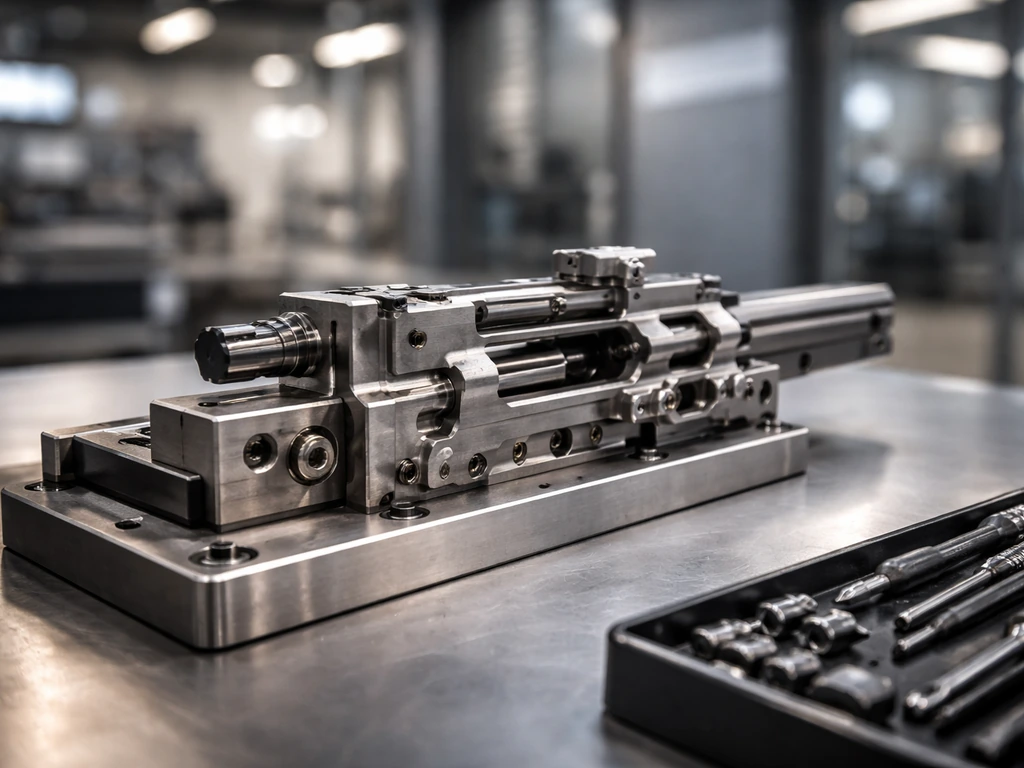
Wait, is this a company or a person?

Heckler & Koch (often written as H&K or HK) is a privately held German firearms manufacturer headquartered in Oberndorf am Neckar, Germany. The company was originally founded by Edmund Heckler, Theodor Koch, and Alex Seidel in 1949. Those founders are long gone from daily operations, and today the business is owned by a Luxembourg-based company called Compagnie de Développement de l'Eau (CDE) S.A., which acquired a majority stake (approximately 60%) on 15 July 2020 with approval from the German Federal Ministry for Economic Affairs and Energy. So when someone searches for "Heckler and Koch net worth," they are almost certainly looking for the financial value of the business itself, not a living individual.
The legal entity operating the business is Heckler & Koch GmbH (and its parent holding structure H&K AG). There is no famous billionaire named Heckler Koch walking around with a Forbes profile. If you arrived here after searching for a specific person with a similar name, you may want to check profiles for other notable figures in the firearms or defense industry. It is worth noting that readers sometimes land on related searches around other prominent names in industrial ownership, such as the Koch brothers, whose wealth stories are entirely separate from this company. If you are specifically trying to estimate the David and Charles Koch net worth, that is a completely different story from Heckler & Koch as a company. The Koch brothers are often discussed in the context of their own financial assets, but that is unrelated to Heckler & Koch’s corporate valuation.
What "net worth" actually means for a company like H&K
For a person, net worth is simple: total assets minus total liabilities. For a company, the math is similar but the terminology shifts depending on what you are trying to measure. There are three main concepts worth knowing here.
- Book value (shareholders' equity): This is the balance-sheet version of "net worth." It equals total assets minus total liabilities as recorded in the company's official accounts. H&K's annual report includes equity figures, which are complicated slightly by hybrid loan instruments that blur the line between debt and equity.
- Enterprise value (EV): This is a broader market-based valuation concept. EV equals the estimated market value of the business plus total debt minus total cash. Since H&K is privately held and not listed on a stock exchange, there is no live market capitalization, so EV estimates rely on comparable company multiples (like EV/EBITDA) applied to H&K's reported earnings.
- Revenue and EBITDA: These income-statement figures are not "net worth" themselves, but they are what analysts and database sites often use as the input for a valuation estimate when hard balance-sheet data is limited.
The key takeaway: any single "net worth" number you see attached to Heckler & Koch on a financial database site is almost certainly a derived estimate, not a number the company publicly reports under that label. The company publishes revenue, EBITDA, profit after tax, financial debt, and balance-sheet equity. From those inputs, analysts construct a valuation range.
The real financial figures: what H&K actually reports
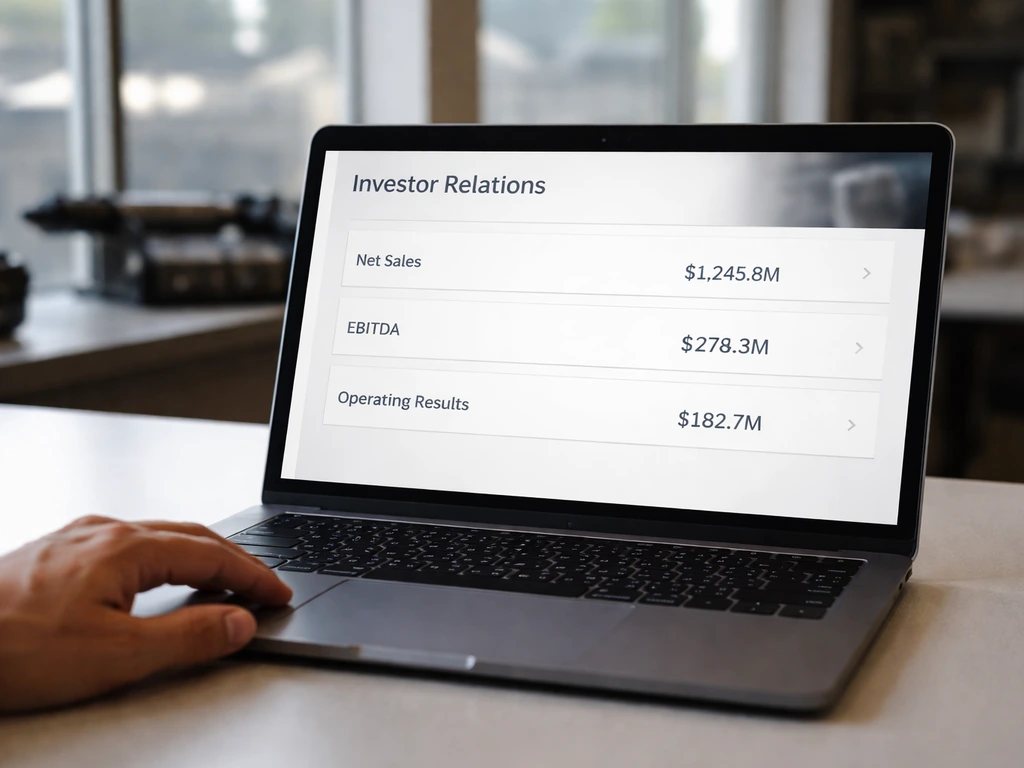
Heckler & Koch publishes financial results through its Investor Relations section and via press releases. Here are the most current headline numbers from their official disclosures as of mid-2026.
| Metric | FY2024 | FY2025 | Change |
|---|---|---|---|
| Net Sales (Revenue) | EUR 343.4 million | EUR 393.0 million | +14% |
| EBITDA (Operating Profit) | EUR 63.1 million | EUR 67.9 million | +7.6% |
| Profit After Tax (EAT) | EUR 31.5 million | EUR 39.5 million | +25.4% |
| Order Intake | EUR 426.2 million | EUR 802.0 million | +88% |
That EUR 802 million order intake figure for FY2025 is worth paying attention to. Order intake is not yet realized revenue: it represents contracts signed and backlog secured that will convert to sales in future periods. This forward-looking metric is highly relevant for estimating what the company's valuation should look like, and it is easy to confuse with current earnings when estimating "net worth." Any estimate built on that number is partially forward-looking speculation, not a current financial snapshot.
For balance-sheet items (total assets, total liabilities, shareholders' equity), the primary source is the H&K AG Group Annual Report, available as a PDF download from the company's Investor Relations page. The 2024 annual report references a hybrid capital structure including a CFA loan and vendor loan, which means the reported equity figure includes hybrid instruments. That matters because different analysts will treat those instruments differently when calculating book equity, which is one reason "net worth" estimates can vary.
The company also invested approximately EUR 100 million in its HK100 modernization program between 2020 and 2025. Capital expenditure of that scale reduces near-term cash and affects book equity, so balance-sheet snapshots taken at different points during that investment cycle will look meaningfully different.
How H&K actually makes its money
H&K's revenue comes from three broad customer segments: military and government procurement, law enforcement and public safety agencies, and civilian or sport shooters. The annual report breaks revenue down across these segments and by geography, and the mix matters a lot for how stable earnings look to an outside analyst.
The dominant driver right now is military and government procurement, especially from Germany, Europe, and transatlantic alliance partners (NATO member states). H&K produces the G36 rifle system, the MP5, the HK416 (used by multiple NATO militaries), the VP9 pistol, and other product lines that are standard-issue or approved for procurement by defense ministries and law enforcement agencies in dozens of countries. Government contracts tend to be large, multi-year, and relatively predictable once awarded, but the timing of contract awards can create big swings in revenue and order intake from one year to the next.
The civilian and sporting market adds a layer of revenue but is more cyclical and sensitive to regulatory changes in major markets like the United States. A policy shift, import restriction, or economic downturn in a civilian market can hit that segment without affecting military orders at all. This segment mix is one reason that simple year-over-year revenue comparisons do not always translate neatly into stable "wealth" estimates.
Where to find reliable numbers and how estimates get compiled

If you want to verify H&K's financial position yourself, start with the primary sources. The company's official Investor Relations page (heckler-koch.com) hosts annual financial statements, quarterly KPI tables, and half-year press releases. The KPI table specifically tracks net sales, EBITDA, and financial debt by quarter, which gives you enough data to monitor trends without waiting for a full annual report.
- Heckler & Koch Investor Relations page: Download the H&K AG Group Annual Report PDF for balance-sheet equity, total assets, total liabilities, and segment revenue breakdown.
- Quarterly KPI table (Kennzahlen & Entwicklung): Tracks net sales, EBITDA, and financial debt across recent quarters so you can spot trends in real time.
- Half-year and annual press releases: Published in both German and English, these summarize revenue, EBITDA, profit after tax, and order intake in accessible language.
- Third-party defense industry reporting: Outlets like ESUT and Soldier Systems Daily cover major contract announcements and financial headlines and can corroborate official figures.
- Financial aggregator databases: Sites like FinancialReports.eu sometimes host mirrored annual report content, but always cross-check against the H&K primary source before trusting a third-party figure.
Net worth databases (including this one) aggregate figures from these kinds of sources and apply valuation frameworks to produce a single digestible number. The methodology typically involves taking reported EBITDA, applying an industry-appropriate EV/EBITDA multiple derived from comparable publicly traded defense companies, then adjusting for known debt and cash positions to arrive at an estimated enterprise value. Because H&K is private, there is no market price to anchor against, so the multiple applied is always an informed judgment call, not a hard fact. That is why transparency about methodology matters.
Why the numbers you see might not match each other
There are several legitimate reasons why different sources publish different "net worth" or valuation figures for H&K, and none of them necessarily means someone is wrong.
- Ownership structure disputes and changes: Local German media have reported disputes around H&K's ownership structure following the CDE acquisition. Any uncertainty about who owns what percentage affects how analysts value equity stakes and assign a total enterprise value.
- Defense procurement timing: A single large contract can move order intake by hundreds of millions of euros in a single year (as the FY2025 order intake jump from EUR 426 million to EUR 802 million illustrates). Estimates based on one year's snapshot can look very different from estimates based on trailing averages.
- Hybrid capital treatment: H&K uses hybrid loan instruments that sit between equity and debt on the balance sheet. Different analysts classify these differently, which changes both the equity (book value) figure and the net debt figure used in enterprise value calculations.
- EV multiple selection: Comparable publicly traded defense companies trade at a range of EV/EBITDA multiples depending on market conditions, growth expectations, and geopolitical sentiment. Applying a 10x multiple versus a 14x multiple to H&K's EUR 67.9 million EBITDA produces a valuation range of roughly EUR 679 million to EUR 951 million before debt adjustments. That is a wide spread from a single variable.
- Accounting periods and currency: H&K reports in euros. Translating to dollars at different exchange rates on different dates adds another layer of variation to any estimate published in USD.
What to trust, what to question, and how to check the latest numbers
The most defensible answer to "what is Heckler & Koch worth" right now, as of June 2026, is a valuation range derived from the FY2025 figures. With EBITDA of EUR 67.9 million and a reasonable defense industry EV/EBITDA multiple (which for comparable privately held European defense manufacturers has historically ranged from roughly 8x to 14x depending on growth profile and backlog), an estimated enterprise value lands somewhere in the EUR 540 million to EUR 950 million range before netting out financial debt. That is a deliberately wide range because the inputs are uncertain, and presenting false precision would not be honest.
Book equity (the balance-sheet version of net worth) will be a lower and more conservative figure. To get the exact number, download the H&K AG Group Annual Report 2025 PDF from the Investor Relations page, find the consolidated balance sheet, and subtract total liabilities from total assets. That is the cleanest single number for "net worth" in the accounting sense.
For next steps: go directly to heckler-koch.com, navigate to Investor Relations, and pull the most recent annual report and quarterly KPI table. Cross-reference the revenue and EBITDA figures against what any third-party database is showing. If a site is citing revenue as a "net worth" figure, that is a category error. If a site is showing a valuation without explaining its methodology or which multiple it applied, treat that number as a rough orientation, not a verified fact. The FY2025 half-year figures (covering the first half of 2025) have also been published and can give you a more current interim view between annual report cycles.
Finally, keep in mind that the financial story here is genuinely moving fast. Süddeutsche Zeitung (via dpa) reported improving business for Heckler & Koch and expectations for revenue growth, summarizing official figures improving business and expectations for revenue growth. The near-doubling of order intake in FY2025 (to EUR 802 million) reflects real demand growth driven by increased European defense spending. As that backlog converts to realized revenue in 2026 and 2027, the company's earnings profile, debt position, and implied valuation will all shift. Any estimate you see today is a snapshot of a company in an accelerating growth phase, not a static number.
FAQ
Why do different websites show very different “Heckler and Koch net worth” numbers?
Because H&K is private, there is no daily share price, so “net worth” figures on databases are model outputs. The more useful approach is to separate book equity (accounting assets minus liabilities) from enterprise value (EV). If a site gives one single number without stating whether it is EV-based or balance-sheet based, treat it as less reliable.
How can I tell whether a “net worth” number is EV-based or book-equity-based for H&K?
Look for what the site is calling the figure. If it cites a multiple like EV/EBITDA or mentions debt and cash netting, it is likely estimating enterprise value, not book equity. If it lists it alongside assets, liabilities, or “shareholders’ equity,” it is closer to a balance-sheet measure. When the label is vague, confirm by checking what line items the site claims to use.
Can I use FY2025 order intake (EUR 802 million) the same way I would use earnings for a net worth estimate?
Order intake is a forward indicator, not realized performance. A common mistake is mixing backlog/order intake with current-year revenue to build a “net worth” view. If the valuation writeup relies heavily on the EUR 802 million order intake without referencing EBITDA, debt, and cash, expect the estimate to be closer to scenario speculation than a snapshot.
Is it legitimate to estimate “net worth” using half-year or quarterly KPI table numbers?
Yes, but only if you use the correct baseline. For a quarter or half-year KPI, rely on the quarterly net sales and EBITDA trend plus the current financial debt and cash level, then apply a consistent multiple framework. Don’t annualize using a simple average if the business has big contract timing swings between quarters, especially for government procurement.
How does the HK100 modernization program affect “net worth” estimates I see online?
H&K’s modernization spending (around EUR 100 million from 2020 to 2025) can lower near-term cash and shift equity through depreciation and capital structure effects. That means an estimate taken at the wrong point in the investment cycle can look “worse” even if the business outlook improves. To avoid that distortion, compare multiple periods (for example, 2 to 3 reporting cycles).
Why can the book-equity or “net worth” number change depending on the source for H&K?
The annual report notes hybrid capital elements, which can be treated differently by analysts when deriving book equity. Some sources may include hybrids in equity, others may reclassify them closer to debt. When you reconcile book-equity style numbers, make sure the methodology aligns with how those hybrid instruments are handled.
What debt and cash adjustments should I check when validating a valuation for H&K?
Yes. Enterprise value typically nets out financial debt and incorporates cash, so an estimate can move a lot if debt rises or cash builds. If a database only uses EBITDA and an industry multiple but does not adjust for debt and cash, it is incomplete for EV-style valuation.
How do EV/EBITDA multiples influence Heckler and Koch valuation, and how should I interpret them?
Many sites apply an EV/EBITDA multiple derived from publicly traded defense peers, but private-company risk, backlog quality, and growth expectations change the appropriate multiple. If the site does not explain the multiple range or comparables logic, you should treat the result as a rough indicator, not a defensible valuation.
What are red flags that a “Heckler and Koch net worth” page is actually about someone else?
If the page is about the company, it should reference H&K legal entities and consolidated financial statements. If you see content that treats “Heckler and Koch” as a person’s fortune (assets, lifestyle claims, celebrity-style net worth), it is usually a mismatch or a scraping error. Confirm you are reading corporate financial outputs, not individual biography content.
What’s the quickest verification workflow if I want to check a “net worth” claim myself?
Use the annual report balance sheet for the cleanest accounting figure (assets minus liabilities), and use the KPI table for trend direction between annual report cycles. Then cross-check that the EBITDA figure used in any EV/EBITDA calculation matches the company’s reported EBITDA for the same period. This avoids the common mistake of mixing different fiscal periods or different definitions of “EBITDA.”
Next Article
Ken Kochenour Net Worth: Estimate, Sources, and How It’s Calculated
Estimate of Ken Kochenour net worth, sources behind it, and how different sites calculate wealth ranges and assumptions.