
Ed Koch's estimated net worth at the time of his death in February 2013 was approximately $10 million to $11 million. That figure comes from multiple estate-planning sources and reporting around his will, which was filed in Manhattan Surrogate's Court on March 11, 2013. It is a well-supported range, not a guess, and the short answer is that virtually all of it was built after he left City Hall in 1989, not during his years in public office.
Ed Koch Net Worth: Estimated Wealth, Income and Assets

Marcus Holloway
21 Apr 2026
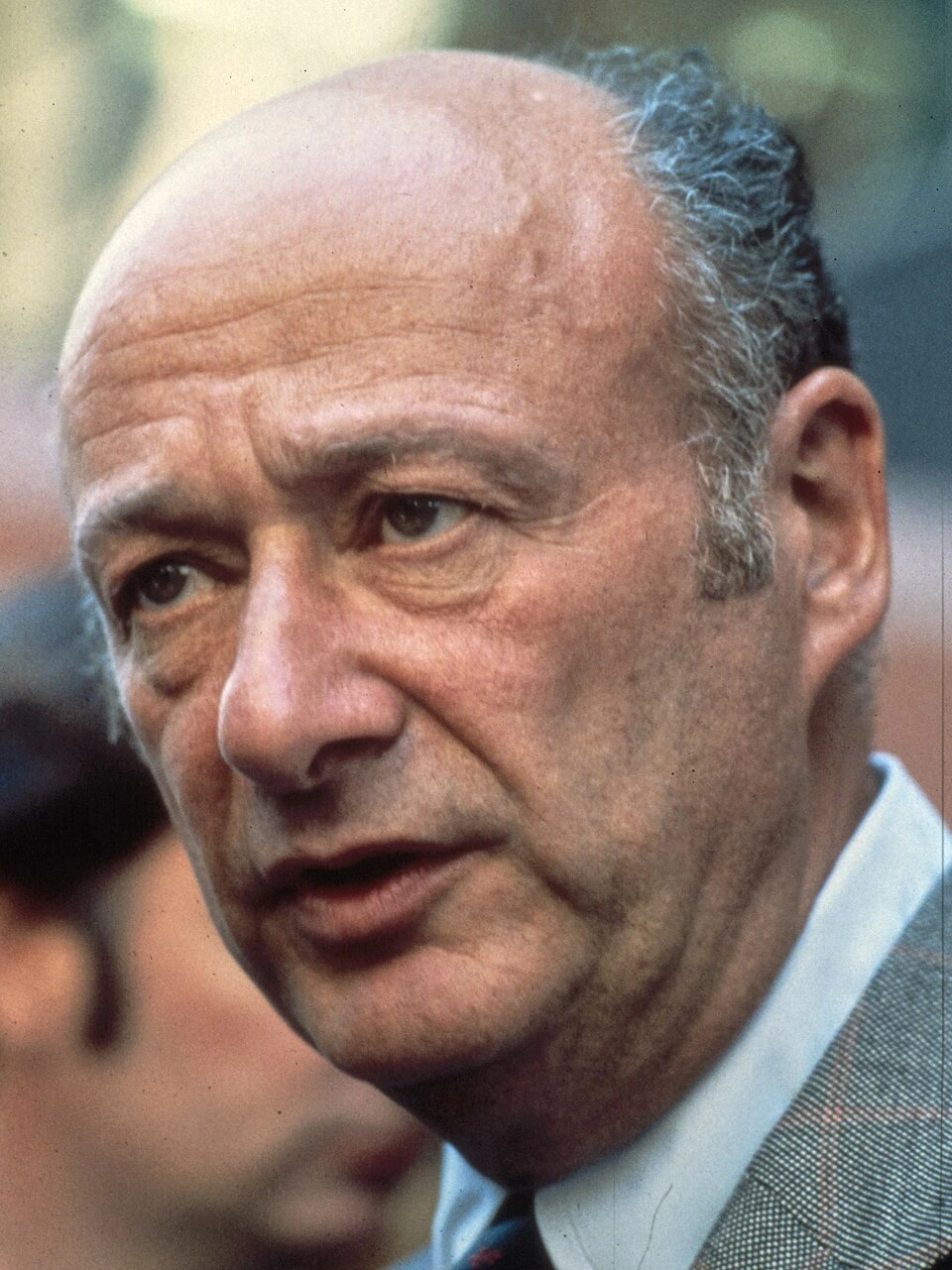
Who Ed Koch was and why his career matters for understanding his wealth

Edward Irving Koch (1924–2013) was one of the most recognizable political figures in American history, largely because of his three terms as Mayor of New York City from 1978 to 1989. Before that, he served in the U.S. House of Representatives from 1969 to 1977. Koch was famously brash, quotable, and visible, and those qualities turned out to matter a lot financially once he left office. He lost the 1989 Democratic primary and walked out of City Hall without much money, but with an enormous public profile that became his most valuable asset.
Beyond politics, Koch was a licensed attorney, an author of multiple books, a media personality who reviewed films and restaurants, and a regular political commentator. He joined the law firm Robinson, Silverman, Pearce, Aronsohn, and Berman LLP as a partner after leaving office. That combination of legal work, media appearances, speaking, and writing defined his post-mayoral financial life and explains the bulk of the $10–$11 million he had accumulated by his death at age 88.
How net worth estimates like this one are put together
For most celebrities and public figures, net worth estimates are built by aggregating several types of information: known salary history, publicly filed documents (wills, court filings, property records), media reporting on income and deals, and informed extrapolation where hard data is unavailable. For politicians specifically, financial disclosure forms (required by law for federal officeholders) are a useful starting point, though they report asset ranges rather than exact values.
Koch's case is unusual in that his estate planning became somewhat public because his will was probated in New York Surrogate's Court rather than handled entirely through private trusts. Probate filings are public records, which means the estate value and some distribution details became accessible. That is why the $10–$11 million figure has real grounding: it comes from documents and reporting tied to actual court filings, not just extrapolation. For comparison, purely trust-based estates often stay private because trust agreements are not public the way probate records are.
When sites report net worth estimates, they typically draw on this kind of public record data, supplement it with credible journalism (Forbes, the Los Angeles Times, UPI, and similar outlets in Koch's case), and acknowledge that the final figure is a reasonable estimate rather than an audited balance sheet. The methodology here follows the same approach: anchor on the best available documented figure and explain the income and asset drivers behind it.
The net worth estimate: what the numbers actually say

The most credible sources converge on a range of $10 million to $11 million as the value of Koch's estate at the time of his death. Forbes, reporting on Koch's will in March 2013, used a working assumption of $10.5 million for its tax analysis. Multiple estate-planning publications that reviewed the same court documents came up with figures in the $10–$11 million range. One summary from an estate-planning newsletter described it as Koch leaving a 'small fortune,' which is accurate in context: it is meaningful personal wealth, but not the kind of mega-fortune associated with billionaires or even many business celebrities.
For context on just how post-office his wealth was: when Koch was first elected mayor in 1978, his documented net worth was $106,890.38. He left office in January 1989 without significant wealth. Everything from roughly $106,000 to $10+ million was built in the 24 years between leaving City Hall and his death. That is actually a remarkable accumulation story for someone who spent most of his adult life in government service.
Where the money came from: income sources across his career
Government salary during his political years

Koch's government salaries were modest by any modern standard. As mayor, his base salary was around $110,000 in the mid-1980s, rising to approximately $130,000 in his final year in office (1988). UPI’s Jan 1, 1986 report based on his tax return described Koch’s mayoral pay at about $110,000 a year, providing context for the salary during his third term. Congressional salaries during his House years (1969–1977) were lower still. A 1986 UPI report based on his tax return showed $285,000 in total 1985 income, which included his $110,000 mayoral salary plus $143,000 from sales of two books and additional income from stocks. That same report is a useful reminder that even while in office, Koch was supplementing his salary with book income.
Post-office law practice
This was the biggest income driver after 1989. The Los Angeles Times reported in 1991 that Koch was earning in excess of $1 million annually as a partner at Robinson, Silverman, Pearce, Aronsohn, and Berman. That figure reflects what a high-profile political name can command at a major law firm, even without day-to-day courtroom work. His value to the firm was largely reputational and client-facing, and the compensation reflected that.
Speaking fees and media appearances
Former mayors of New York City can command substantial speaker fees, and Koch was particularly in demand given his personality and national profile. The Los Angeles Times reported in late 1989 that friends predicted his post-office roles would generate more than $500,000 annually, a figure that turned out to be conservative once his law income was factored in. Forbes specifically noted speaking fees as a post-office income factor. Koch also reviewed movies and restaurants for media outlets and was a regular political commentator, adding smaller but consistent media-related income streams.
Book writing and publishing
Koch was a prolific author. His 1985 tax return alone showed $143,000 in book sales, and he continued writing and publishing after leaving office. Book advances and royalties were a meaningful contributor to his income both during and after his mayoral years, though not the dominant driver compared to his law practice.
Assets and the broader financial picture

Koch's asset base at death was relatively straightforward for someone of his wealth level. His estate of $10–$11 million almost certainly included investment accounts (his 1985 tax return already showed stock income while he was still mayor), the proceeds of decades of high law-firm earnings, and whatever real estate he held. Koch famously lived in Greenwich Village, and Manhattan real estate alone would have represented a significant portion of net assets for anyone who held property there over that period.
He also made a $100,000 charitable donation near the end of his life to establish a program in his name promoting public and government service, which Forbes noted as part of the estate discussion. That kind of deathbed charitable gift reduces the taxable estate but also signals that the underlying estate had enough cushion to absorb it. His pension and retirement benefits from government service would have provided a baseline income floor in retirement, though they would not represent a large asset on a balance sheet at that wealth level.
The tax bite: why $10–$11 million didn't all go to heirs
One of the more concrete pieces of information available about Koch's estate comes from the tax analysis attached to the estate-planning discussion of his will. Forbes, using a working figure of $10.5 million, calculated that $1. Forbes (Mar 15, 2013) assumed the Ed Koch estate was worth $10.5 million for tax analysis, estimating $1.45 million to the IRS and $1.1 million to New York State Forbes (Mar 15, 2013) used a working figure of $10.5 million for tax analysis. 45 million would go to the IRS and $1.1 million to New York State, for a combined tax burden of roughly $2.55 million. Some sources estimated the total tax hit at around $3 million when all factors were considered. That left heirs and beneficiaries with roughly $7–$8 million of the gross estate, depending on the actual value and the specific trust and bequest structure used.
This is worth knowing because when you see a $10–$11 million estate figure, that is the gross estate value, not what beneficiaries received. The distinction matters when comparing across public figures, since some sources report gross estate, some report post-tax inheritance, and the difference can look like a major discrepancy.
Late-career earnings and what happened to his wealth near the end
Koch remained professionally active well into his later years. He continued with the law firm, kept doing media commentary, and maintained a public presence that supported speaking and appearance fees. The bulk of his $10+ million was accumulated through consistent high earnings over roughly two decades (1989–2013) rather than through any single windfall. There is no reported major inheritance, no real estate development score, and no investment windfall that jumps out from the record. It was steady professional earnings, compounded over time, from someone who monetized a very famous name effectively.
The $100,000 donation near death and the estate tax planning discussions in the public record suggest Koch was thoughtful about his estate in his final years, though critics of his estate plan noted that better trust structuring could have reduced the tax burden. The will was filed in Surrogate's Court in March 2013, about a month after his death on February 1, 2013.
Why different sites report different numbers, and how to verify the estimate
If you search for Ed Koch's net worth, you will likely encounter figures that range from around $1 million to $12 million or more depending on the site. To learn how other firms and executives are valued, see stephen kotler douglas elliman net worth. If you are specifically trying to pin down his stan koch net worth claims, compare them against the same court filings and reputable reporting used for Ed Koch Ed Koch's net worth. Billy Koch's horse racing involvement is a separate topic from Ed Koch's net worth, but similar evidence-based methods can help you assess claims and figures Billy Koch horse racing net worth. If you are also searching for hawk koch net worth, use the same evidence-based approach: verify whether claims trace back to primary records or credible reporting Ed Koch's net worth. For example, other widely cited net-worth numbers connected to the Koch name, including Greg Koch Stone Brewing figures, are often compiled from similar mixes of public documentation and secondary reporting greg koch stone brewing net worth. If you are specifically looking at Hilton Koch net worth figures, focus on the same kind of evidence-based approach and verify whether any numbers trace back to primary documents or credible reporting. Here is why those gaps exist and how to think about them:
| Reason for variation | What it means in practice |
|---|---|
| Different reference points in time | A figure based on his 1978 net worth ($106,890) versus his 2013 estate ($10–$11 million) produces wildly different numbers. Always check whether the estimate is at death, at peak earnings, or at a specific career moment. |
| Gross estate vs. liquid net worth | Estate value includes illiquid assets. Liquid net worth could look lower. Some sites report one, some report the other. |
| Trusts vs. probate | Assets held in trusts are not public. If Koch held significant assets in trusts, the probated estate could understate total wealth. Probate filings capture only what went through court. |
| Extrapolation methods | Sites that estimate based on salary multiples or career earnings models may produce different figures than those anchored to probate documents. |
| Outdated sourcing | Some net worth databases pull from old aggregator data without updating for estate records or more recent journalism. |
To verify the estimate yourself, the most useful primary source is the New York Surrogate's Court filing from March 2013, which is a matter of public record. The Forbes piece from March 15, 2013 (titled 'Ed Koch's Will: Taxes Take Big Bite Out Of Hizzoner's Nest Egg') is the most detailed journalistic treatment of the estate and worth reading directly. For his income during the mayoral years, UPI's 1986 report on his tax return and the Los Angeles Times pieces from 1989 and 1991 are the best contemporaneous sources.
The $10–$11 million range is the most defensible estimate because it is anchored to court-filed documents and corroborated by multiple independent estate-planning sources that reviewed those documents. It is not an extrapolation or a salary multiple, it reflects what was actually in the estate. Treat any figure significantly outside that range with skepticism unless you can find a specific source explaining the discrepancy.
How Koch compares to other political and public figures
Koch's $10–$11 million estate is a useful reference point when thinking about how wealth accumulates for career public servants who become media personalities after office. It is a different wealth profile than, say, a business founder or entertainment celebrity. His story of entering office with essentially nothing and leaving 24 years later with a $10 million estate built through law, media, and speaking is a good illustration of how public-figure brand value converts to income after government service. If you are researching other public figures in similar categories, the patterns of post-office earnings and name-value monetization tend to follow a similar arc, though the scale varies significantly. If you are comparing Koch’s situation to claims about Donald L. Kotula’s finances, you can apply the same checklist by prioritizing primary records and reputable reporting. Donald L. Kotula net worth claims can be checked against primary records and reputable reporting the same way as other wealth estimates.
FAQ
Does the “Ed Koch net worth” figure represent what his heirs inherited?
When people say Ed Koch net worth, they often mean different things: gross estate value versus what beneficiaries actually received after taxes and expenses. The article focuses on the gross estate range at death ($10 million to $11 million), while the IRS and New York taxes mentioned in the estate discussion can substantially reduce the inheritance amount.
Is Ed Koch’s estate value the same as cash he had on hand?
A common mix-up is thinking the will value equals cash at the moment of death. Probate and tax discussions usually describe an estate valuation that includes assets like investment accounts and potential real estate value, then taxes are calculated based on that overall valuation, not just liquid funds.
How can I tell if a “Ed Koch net worth” number is credible versus misleading?
Because the Surrogate’s Court probate record is public, you can validate the range by checking what was reported for estate valuation and how the tax analysis was computed. Sites that cite dramatically lower numbers may be summarizing partial figures, using outdated assumptions, or quoting later net-of-tax estimates without clarifying it.
Did Ed Koch get wealthy during his time as mayor?
The article emphasizes that most wealth accumulation happened after leaving City Hall in 1989. Even if you see high numbers online that imply he was wealthy during his mayoral tenure, the documented starting point described (around $106,890) and the later earnings drivers make it unlikely that his public office years were the main source of the final $10 million plus estate.
Was Ed Koch’s wealth built from one big windfall?
Yes, but it is typically not a single “day-one” asset. The article describes a picture of steady high earnings after office, particularly from a major law partnership plus media and speaking. That pattern usually produces a growing portfolio over time rather than a one-time windfall.
Why do net worth estimates for Ed Koch vary so much across websites?
Post-mayoral income in this case is tied to activities that can pay unevenly year to year, like speaking engagements and media appearances. That’s one reason some estimates vary, since websites may smooth or extrapolate income rather than model actual annual compensation using the same source documents.
Why is the most defensible number a range, not a precise amount?
Even for a well-known figure, some documents may describe assets in ranges or through valuation methods rather than exact “account by account” balances. The article’s “reasonable range” approach accounts for that, so a tight number like exactly $10.7 million would be less defensible than the $10 million to $11 million band tied to filings and corroboration.
What should I check before trusting a high or low “Ed Koch net worth” claim?
If someone claims a significantly larger Ed Koch net worth, use a simple checklist: (1) does it cite probate or tax analysis tied to the Surrogate’s Court filing, (2) is it clear whether the number is gross estate or after taxes, (3) does it explain which assets were included (real estate, investments), and (4) does it rely on credible reporting rather than a generic celebrity-style estimate.
Does Ed Koch’s near-death donation mean he had less money than reported?
A charitable gift near the end of life can affect estate tax calculations and the final net inheritance, but it does not automatically mean the estate was “small.” In this case the article notes a $100,000 donation and also discusses meaningful tax amounts, which is consistent with a sizable gross estate even after planning choices.
How do Ed Koch’s pension or retirement benefits factor into his net worth?
Government pensions and retirement benefits generally provide income, but they may not represent a major portion of a $10 million plus estate at death. The article treats retirement income as a baseline rather than a dominant balance-sheet driver, so pension figures alone should not be used to infer net worth.
Next Article
Koffler Family Net Worth: Estimate, Sources, and How to Verify
Get a Koffler family net worth estimate and learn how to verify it, avoid mixed identities, and compare sources.