
Henry Koschitzky's estimated net worth, as of mid-2026, falls in a range of approximately $300 million to $600 million USD, though no verified public figure exists. That range is derived from his position as President and CEO of IKO Industries, one of North America's largest privately held roofing and building materials companies, and from the broader Koschitzky family's generational ownership of that business. Because IKO is private and the family does not publish financial disclosures, every figure you'll find online is an estimate built from inference, not from audited accounts. Because searches for koschitzky family net worth usually lump Henry and related family business control together, the same uncertainty applies to the family-level totals as well.
Henry Koschitzky Net Worth: Estimate, Sources, and How to Verify


Who Henry Koschitzky is

Henry Koschitzky is a Canadian business executive and the President and CEO of IKO Industries Ltd, a multinational manufacturer of roofing shingles, insulation, and other building materials. IKO was founded in 1951 by his father, Isidore (Israel) Koschitzky, who opened the company's first plant in Calgary, Alberta. Henry and his brother Saul Koschitzky inherited and significantly expanded that business, growing it from a regional Canadian manufacturer into a company with plants across North America and Europe.
Publicly documented milestones include Henry's presence at the 2018 ribbon cutting for IKO's Hillsboro, Texas shingle plant and the 2022 grand opening of a major new facility in Brampton, Ontario. He also appeared alongside David Koschitzky, who is listed as Co-Chair and CEO of IKO North America, which reflects the layered family leadership structure within the company. Beyond the core business, Henry Koschitzky is publicly known as a philanthropist: he and his wife Julia have funded named facilities including the Koschitzky Center for conservation of ancient pottery through the Friends of the Israel Antiquities Authority, and the family contributed a $1 million gift to build a construction materials testing facility at the University of Manitoba. He is also listed as a board member at the Associated Hebrew Schools of Toronto.
One note on disambiguation: the Koschitzky name appears across several interconnected Canadian Jewish philanthropic and business contexts. Elianne Koschitzky appears in Jewish Federations of Canada leadership, and Julia Koschitzky has her own prominent philanthropic profile. When you see the name in a net worth search, Henry specifically refers to the IKO executive described above, not to other family members who share the surname.
What a net worth estimate actually means here
When a reference database publishes a net worth figure for someone like Henry Koschitzky, it is not reporting a bank balance or a certified financial statement. It is an estimate, typically expressed as a range, that aggregates publicly available signals: company valuations, known equity stakes, comparable industry peer wealth, publicly reported gifts and philanthropic commitments, real estate records, and business directory data. The number is meant to give a useful order of magnitude, not an exact answer.
For private company owners like Henry, the estimate is harder to pin down than it would be for, say, a publicly traded CEO whose stock holdings are filed with regulators every quarter. With IKO, there are no SEC equity disclosures for the main operating company (IKO Industries Ltd is Canadian and private). The D&B listing for Ayal Capital Advisors US Feeder LP names Henry Koschitzky as a key principal, and a CorporationWiki entry links him to Goldis Enterprises Inc, but those directory records are aggregator leads, not verified financials. The honest answer is that the estimate range is the best available tool, and anyone claiming to know an exact figure is overstating their certainty.
Henry Koschitzky net worth: the estimate and breakdown

Working from what is publicly known, here is how the estimate is constructed. IKO Industries is consistently described as one of North America's largest roofing manufacturers. The North American roofing materials market is a multi-billion-dollar industry, and IKO operates manufacturing plants across Canada, the United States, and Europe. Family-owned building materials companies of comparable scale (with multiple international manufacturing facilities and decades of operation) have valuations that typically run into the billions. Henry and Saul Koschitzky appear to share ownership and leadership of the business, so even a conservative fractional share of a multi-billion-dollar enterprise places Henry's personal net worth well into the hundreds of millions.
| Wealth Component | Estimated Contribution | Confidence Level |
|---|---|---|
| IKO Industries equity stake (fractional family ownership) | $250M – $500M | Low-medium (private company, no public valuation) |
| Real estate and personal assets | $20M – $50M | Low (no public property records compiled) |
| Philanthropic capital committed (gifts documented) | $5M+ documented | Medium (publicly reported gifts) |
| Investment vehicles (Ayal Capital, Goldis Enterprises, other) | $10M – $50M | Low (directory leads only) |
| Overall estimated range | $300M – $600M | Low-medium (inference-based) |
The wide range reflects genuine uncertainty, not a lack of research effort. Until IKO publishes financial statements or a family member discloses holdings through a regulatory filing, the equity stake component will remain the biggest unknown, and it is also by far the biggest driver of total net worth.
Where these estimates come from and how to verify them
The primary inputs for any credible estimate of Henry Koschitzky's net worth are: industry-level company valuation comparables, public records of named philanthropic gifts (the University of Manitoba gift and the IAA conservation lab are the clearest documented examples), business directory principal listings (D&B, CorporationWiki, Cybo), and any regulatory filings. The SEC AdviserInfo Form ADV submission that names Henry Koschitzky is worth checking directly at adviserinfo.sec.gov because it may contain additional information about registered investment roles, though it should be interpreted carefully since Form ADV pertains to investment advisory registration and not personal wealth.
To verify or challenge any specific figure you encounter, here is the practical checklist. First, look for the underlying source: does the site citing a number link to actual filings, news coverage, or company disclosures? Second, check Canadian corporate registries (such as the Ontario Business Registry or Alberta Corporate Registry) for any public IKO-related entities.
Third, search for litigation records, since the 2012 Justia federal court order that names Henry Koschitzky as a defendant (and notes dismissal as to him) is an example of how court documents sometimes surface financial details in discovery. Fourth, look at Dun and Bradstreet or similar commercial databases for any updated principal listings. None of these steps will give you a precise net worth, but together they help you triangulate whether a published figure is reasonable or inflated.
If you are specifically searching for Felix Koskei net worth, use the same checklist to confirm whether any cited figures have supporting disclosures Henry Koschitzky's net worth.
How Henry Koschitzky's wealth was likely built
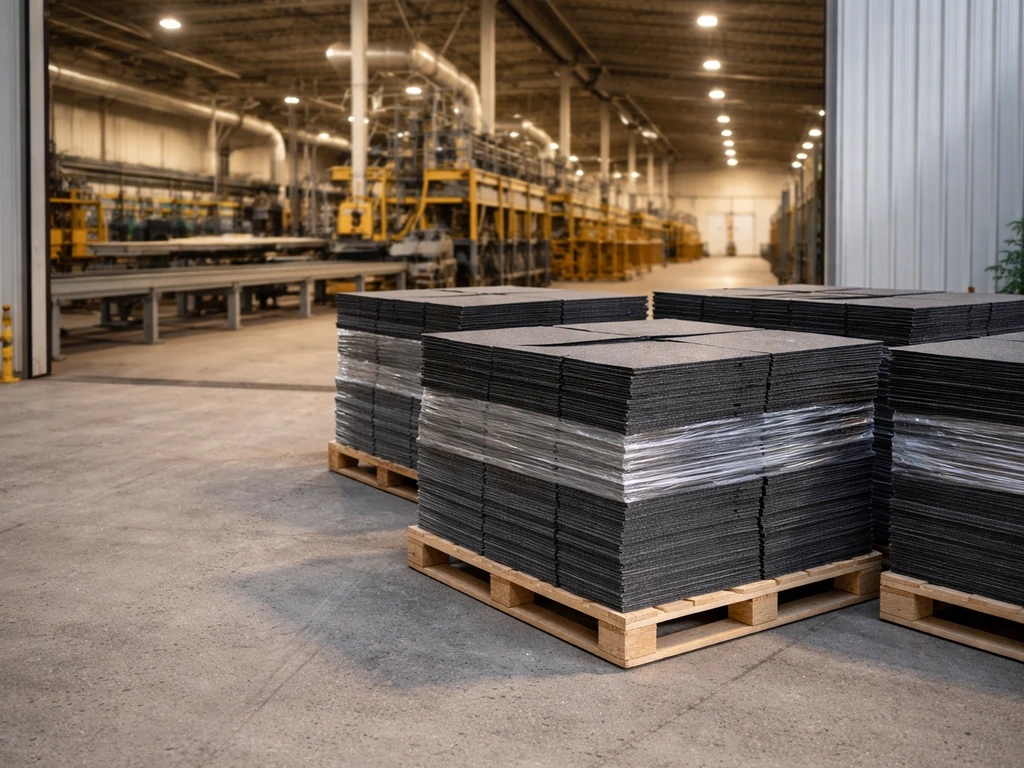
The foundation is generational business ownership. Isidore Koschitzky started IKO in 1951, and Henry and Saul grew that company over several decades. The building materials sector experienced sustained growth through the U.S. housing booms of the late 1990s, mid-2000s, and post-2010 recovery. Each cycle of new construction and re-roofing demand would have generated substantial revenue for a manufacturer with the scale and distribution reach IKO has built. The opening of the Hillsboro, Texas plant in 2018 and the Brampton expansion in 2022 signal ongoing capital investment, which is consistent with a business that is generating enough cash flow to keep expanding its physical footprint.
The philanthropic record also offers indirect clues. The $1 million University of Manitoba gift and the named conservation laboratory in Israel represent the kind of charitable giving that typically signals personal liquidity well beyond the gift amount itself. Families operating at this level of philanthropy, especially across multiple named facilities in different countries, usually have net worth in the hundreds of millions range at minimum. That pattern aligns with the estimate range presented above.
The investment principal listings (Ayal Capital Advisors, Goldis Enterprises) suggest Henry Koschitzky also has capital deployed outside of IKO itself, which is common for second-generation family business leaders who diversify personal wealth into investment vehicles alongside the core operating company.
What could reduce that number
Net worth is not static, and several factors could push Henry Koschitzky's actual figure below the estimate range. The most significant downside risk is a decline in IKO's business valuation. Building materials companies are cyclical: a prolonged housing market slowdown, a spike in input costs (asphalt, fiberglass), or a major product liability judgment could all compress the company's value and, with it, the equity-based portion of Henry's net worth. The 2012 federal court case that named him as a defendant (subsequently dismissed) is a reminder that litigation is a real variable in any estimate for a manufacturing company executive.
Philanthropic commitments are another factor. Documented gifts of $1 million or more, and the funding of named facilities in multiple countries, represent real capital going out the door. The family appears to have a sustained, multi-decade philanthropic program, which means charitable giving is an ongoing draw on wealth rather than a one-time event. That is admirable, and it also means the net figure after commitments may be lower than a gross asset estimate suggests.
Finally, private family business structures often involve shared ownership across multiple family members. If the IKO equity is distributed across Henry, Saul, David, and potentially other family members and trusts, Henry's individual share could be meaningfully smaller than a calculation based on full company value would imply. That is why the estimate range is wide, and why you should treat any single-number claim with skepticism.
How to stay current and avoid bad information
Net worth estimates for private company executives like Henry Koschitzky go stale quickly, and a lot of sites recycle old figures without updating them. Here is how to keep your information fresh and avoid the most common traps.
- Check the publication date on any net worth article. A figure from 2019 tells you nothing useful about 2026, especially given how much IKO has expanded since then.
- Look for primary source anchors. If a site cites a specific dollar amount but links to no filing, interview, or news article, treat that number as a guess.
- Search Google News for 'IKO Industries' and 'Henry Koschitzky' filtered to the past 12 months. New plant openings, executive announcements, or litigation news are the most reliable signals that the underlying business value is changing.
- Check EDGAR (SEC AdviserInfo) and Canadian corporate registries periodically. If new Form ADV filings or corporate amendments appear, they can surface information about registered roles and related entities.
- Be skeptical of round numbers. Figures like '$500 million exactly' are almost always editorial guesses. A range with a stated methodology is more credible than a precise headline number.
- Cross-reference with related family profiles. The broader Koschitzky family wealth picture, including Julia Koschitzky's public profile and the family's collective philanthropic footprint, gives useful context for evaluating whether an individual estimate is in the right ballpark.
For comparison, researchers looking at similarly structured Canadian family business fortunes, such as those tied to other multi-generational manufacturing or real estate dynasties, will recognize that the Koschitzky situation is not unusual: significant but privately held wealth, limited public disclosure, and an estimate that requires inference rather than direct reporting. If you are also researching related family wealth profiles, such as the Koschitzky family net worth as a collective entity, or comparable Canadian business family fortunes like the Koffler family net worth, the same methodology applies: anchor to business scale, documented philanthropy, and any available regulatory filings, then express the result as a range rather than a single number. The Koffler family net worth estimates follow similar logic, since they are also tied to privately held business operations and incomplete public disclosures. This includes the Koschitzky family net worth as a collective entity, when available.
The bottom line: Henry Koschitzky is a substantial figure in Canadian manufacturing and philanthropy whose personal net worth is most credibly estimated between $300 million and $600 million, driven primarily by his family's ownership stake in IKO Industries. That range will shift as IKO's business evolves, as new corporate disclosures emerge, and as philanthropic commitments continue. Treat any figure you find, including this one, as a working estimate subject to revision, not a final answer.
FAQ
Why do some sites show a single “net worth” number for Henry Koschitzky when the article says only a range is credible?
Many sites convert an underlying range or an older guess into one rounded figure for click appeal. Without audited statements or a disclosed ownership percentage, that “single number” is not verified, so treat it as a reformatting of an estimate rather than an independently confirmed calculation.
If Henry is a CEO of a private company, can his net worth be inferred from salary alone?
No, executive pay is usually only a small portion of wealth for majority owners in privately held firms. The article’s logic depends on equity and company value signals, so using compensation records would likely understate his actual net worth.
What would most quickly change Henry Koschitzky’s net worth up or down?
The largest driver is typically the valuation of the family’s IKO equity stake. Substantial shifts in IKO’s profitability, debt levels, or market multiples, as well as major contingent liabilities (product or litigation exposure), can move the implied net worth even if Henry’s personal income stays stable.
How can I confirm I’m looking at the correct Henry Koschitzky in net worth searches?
Cross-check the context of the listing, such as whether the profile links to IKO Industries leadership and related facility milestones (Texas and Ontario openings) rather than to other family members involved in philanthropy. The surname is shared across multiple public figures, so mismatches are common in aggregator databases.
Do philanthropic gifts and named facilities mean Henry’s personal net worth is definitely at least equal to the donation amount?
Not necessarily. Gifts can be funded from cash flow, planned giving, or joint family resources, and the donation amount is not the same as the donor’s remaining liquidity. However, repeated, large named gifts across multiple countries are still a reasonable indirect signal of substantial financial capacity.
Can SEC-related sources help verify Henry Koschitzky’s wealth?
They can help verify certain investment-related roles, but they usually will not disclose a private owner’s net worth. The article notes Form ADV may be worth checking, yet Form ADV is about advisory registration and activities, not a direct personal wealth statement.
Why do Dun and Bradstreet or similar directories not settle the net worth question?
They can identify principal names, business relationships, and corporate links, but they generally do not provide certified balance sheet or ownership percentage data. Directory entries are useful triangulation inputs, not proof of the dollar amount.
If I see a net worth estimate that’s far outside the $300 million to $600 million range, how should I assess whether it’s inflated?
Look for whether the site cites any concrete inputs beyond vague wording, such as references to identifiable equity stakes, transactions, or specific regulatory disclosures. If it only repeats “major shareholder” claims without showing the basis, the figure is likely overstated or outdated.
Does family ownership structure mean Henry’s personal share could be much smaller than IKO’s total value suggests?
Yes. Private family businesses often distribute equity across multiple relatives, trusts, and holding entities. Even if the family wealth is very large, Henry’s individual slice can be reduced by shared ownership and cross-entity arrangements, which is why a wide range is more credible than a tight number.
How often do these net worth estimates go stale for private company executives, and when should I re-check?
They can become outdated as soon as company valuation, debt, or ownership structure changes, but many sites update infrequently. A practical trigger to re-check is when new major facility announcements, restructuring, litigation, or credible valuation-related reporting emerges.
Kovler Family Net Worth Estimate: How It’s Calculated
Estimated Kovler family net worth and method, sourced from public assets and business stakes, with reliability and how t